
Click to enlarge
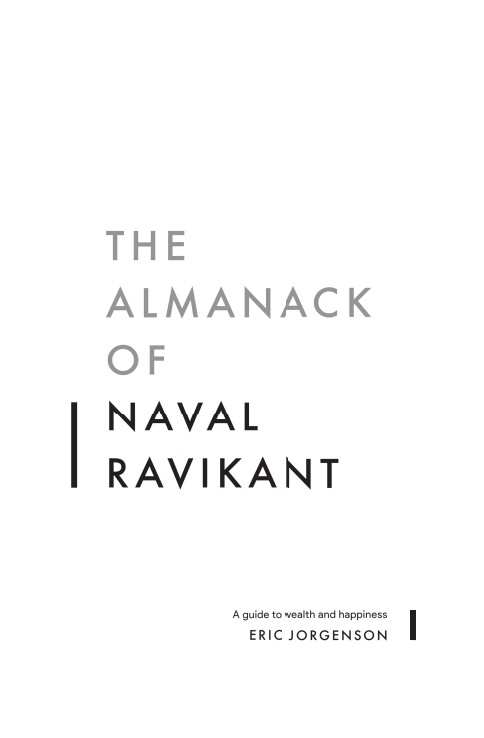
The Almanack Of Naval Ravikant
Tags
💰 Available in Combo Offers
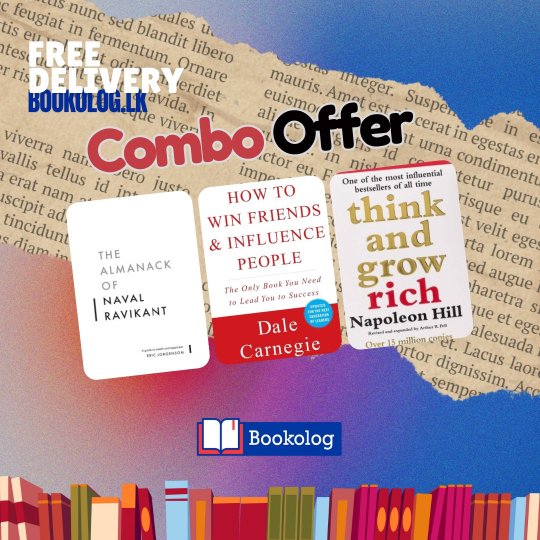
Wisdom & Wealth Set
A powerful blend of modern wisdom, classic success thinking, and people skills for ambitious minds.
Out of Stock
Currently unavailable
Currently unavailable: let us help you find it
Ask about this book
Not sure if it's right for you?
Ask our assistant anything about The Almanack Of Naval Ravikant.
Answers are AI-generated from this book's details and may not be perfect.
The Almanack of Naval Ravikant is a modern guide to living a richer, wiser, and more fulfilling life. Curated and edited by Eric Jorgenson, this book distills years of Naval Ravikant's tweets, interviews, essays, and podcasts into a single powerful volume. Rather than offering conventional motivational advice, it delivers practical, real-world wisdom applicable to career, finance, relationships, and personal growth. In an era of information overload, this almanack presents timeless principles from one of the most successful angel investors and thinkers of our generation. For readers in Sri Lanka, where the pursuit of financial independence and inner peace is increasingly relevant, this book arrives as a rare beacon of clarity through Bookolog.
Naval Ravikant is known as a successful entrepreneur and angel investor behind companies like Twitter and Uber. But what sets him apart is his philosophy of life, blending deep thought with a grasp of business, technology, and human behavior. He shares insights on how wealth is created, why happiness is a skill, and how to build a life that offers both freedom and peace of mind. The book is structured around two main parts: Wealth and Happiness, with additional chapters on decision-making, reading, and learning. Each chapter is a mosaic of insights that can be read in any order, yet together form a coherent philosophy for a life well lived.
A core idea is that wealth comes not from working more hours, but from creating leverage. Naval explains how skills, technology, media, and capital allow people to produce far more value than through effort alone. He encourages readers to build unique skills, take ownership of their work, and focus on long-term thinking rather than chasing quick rewards. He identifies three types of leverage: labor, capital, and what he calls 'code and media'-creating software or content that works for you 24/7. In the modern world, code and media are the most important because they are permissionless and scalable, offering a game-changing path for aspiring entrepreneurs in Sri Lanka's growing digital economy without requiring vast initial capital.
Naval emphasizes being 'specific' and 'accountable'. True wealth comes from doing what you are uniquely suited to do and being accountable under your own name. The book explains how to find your specific knowledge, gained through genuine curiosity and play, not through traditional schooling. He advises working with people smarter and more ambitious than yourself, living below your means, and investing in assets that produce passive income. The Almanack does not shy away from hard truths: building wealth requires patience, discipline, and a willingness to take risks. But the reward is financial freedom-the ability to do what you want, when you want, with whom you want.
Another powerful theme is happiness. Naval argues that happiness is not from success, money, or external approval. Instead, it comes from understanding your mind, letting go of unhealthy desires, and living in alignment with your values. He talks about mental clarity, self-awareness, and choosing peace over stress. Through simple but profound ideas, the book shows how to reduce anxiety and find contentment even in a busy world. Happiness is a default state when you remove jealousy, resentment, and craving. Drawing on meditation, stoicism, and Buddhism, Naval presents these in a secular, practical way. He suggests sitting with negative emotions without judgment, regular exercise, minimal news consumption, and digital detox for inner peace.
One of the most striking sections is on 'desire'. Naval states that desire is a contract to be unhappy until you get what you want. The key to happiness is to reduce desire and accept the present moment fully. This does not mean giving up ambition; rather, it means focusing desires on what truly matters and letting go of societal expectations. The Almanack offers strategies for gratitude, meditation, and mindfulness. It also explores the link between happiness and productivity, arguing that a peaceful mind is more creative. For readers in Sri Lanka, where family and community are central, these teachings resonate deeply, offering a way to balance personal ambition with emotional well-being.
The Almanack also explores learning, decision-making, and clear thinking. Naval emphasizes reading widely, building mental models, and developing independent thinking. He encourages questioning common beliefs, avoiding unnecessary competition, and creating your own path. The book is filled with mental models: inversion (looking at problems backwards), Hanlon's razor (never attribute to malice what can be explained by ignorance), and first principles thinking (breaking down complex problems into basic truths). This is especially valuable for entrepreneurs and students in Sri Lanka, where education often rewards memorization over critical thinking.
Naval's advice on decision-making is to make fewer but bigger decisions. Most daily decisions are unimportant and can be automated or eliminated. The book shows how to identify truly important choices, such as whom to marry, what to work on, and where to live. For each, take your time, gather information, and use mental models to evaluate options. He warns against social proof and groupthink, urging readers to think for themselves. A chapter on reading and learning explains that the best way to learn is to read widely, especially foundational books in science, mathematics, and philosophy. He recommends rereading great books and focusing on timeless wisdom over trends.
What makes this book special is its clarity and simplicity. Each chapter consists of short, sharp insights that are easy to read but deeply meaningful. You can open it at any page and find an idea that makes you pause and think. Whether you are an entrepreneur, a student, or someone simply looking to live better, the lessons are universal and timeless. The Almanack does not claim to have all the answers, but provides a framework for you to find your own. It respects the reader's intelligence and avoids hype, offering principles tested in the real world and refined through years of reflection.
For the Sri Lankan audience, Bookolog is proud to bring this masterpiece to your doorstep. In a world of noise and stress, this book offers a quiet refuge of wisdom. It is not just about getting rich; it is about becoming a better human being, a more thoughtful investor in your own life, and a more compassionate person. Whether navigating the startup ecosystem in Colombo or seeking inner peace in a busy household, The Almanack of Naval Ravikant will be a trusted companion on your journey.
Key Takeaways
- Wealth isn't about working harder but creating leverage with skills, technology, and long-term thinking.
- Happiness is a skill you can cultivate by understanding your mind and letting go of unhealthy desires.
- Clear thinking and independent judgment matter more than following conventional wisdom or chasing trends.
- Reading broadly and building mental models helps you make better decisions in life and business.
- True freedom comes from owning your time and designing a life aligned with your values, not from money alone.
Customer feedback
Reviews & Service Ratings
See what readers say about this book and our service.
Service rating
0.0/5
Please sign in to leave a review and rate our service.
No reviews yet. Be the first to rate this book and our service.
You Might Also Like
Browse All




Products You May Like
Shop All




Bookolatha
Online · Bookolog assistant
Chat history
This chat stays available while you browse.
Log in to save and revisit multiple conversations.
Log in →Bookolatha is grounded in our catalogue and store info. Answers may not be perfect.