
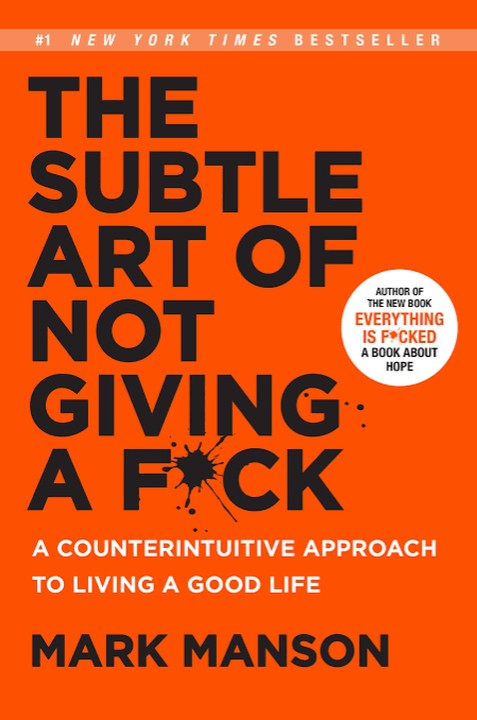
Click to enlarge
The Subtle Art Of Not Giving A F*ck
Tags
In Stock
In stock: 2-5 days delivery
Ask about this book
Not sure if it's right for you?
Ask our assistant anything about The Subtle Art Of Not Giving A F*ck.
Answers are AI-generated from this book's details and may not be perfect.
In a world obsessed with relentless positivity and curated happiness, Mark Manson's The Subtle Art of Not Giving a F*ck arrives as a bracing splash of cold reality. This is not another self-help book promising eternal bliss or a life free from pain. Instead, it is a raw, unflinching manifesto that argues the opposite: the secret to a fulfilling life lies not in running from our problems but in choosing which problems are worth our struggle. With a voice that is at once profane, hilarious, and deeply wise, Manson dismantles the myth that we must always be positive and offers a counterintuitive path to meaning: learning to let go of the things that do not matter so we can fully embrace the things that do.
The book opens with a blunt thesis: not giving a f*ck does not mean being indifferent. It means being selective. In an age of endless information, social media comparison, and societal pressure to be extraordinary, we have spread our f*cks too thin. Manson argues that we are all plagued by the "feedback loop from hell," where our attempts to feel better about ourselves only make us feel worse. The way out is not to fix every flaw but to accept our limitations, our mortality, and our inherent ordinariness. Drawing on academic research, philosophy, and his own experiences, Manson crafts a guide that is less about self-improvement and more about self-acceptance borne from honesty.
The subtle art at the heart of this book is about defining your values. Manson introduces a spectrum that ranges from unhealthy values (like feeling good all the time or being liked by everyone) to healthy values (such as honesty, growth, and contribution). He argues that we cannot build a meaningful life on a foundation of shallow values. Instead, we must face the uncomfortable truths that life is unfair, that not everyone can be special, and that real happiness comes from solving problems, not escaping them. This perspective is liberating for those trapped by the pressure to constantly achieve and appear perfect. For Sri Lankan readers, where cultural expectations around family honor, career success, and social standing can be overwhelming, Manson's message offers a refreshing permission slip to prioritize what genuinely matters to you, even if it means disappointing others.
One of the most powerful sections deals with entitlement and victimhood. Manson challenges the idea that we deserve to be happy or successful just because we try. Instead, he advocates for a sense of responsibility and agency, drawing on Stoic philosophy: we cannot control what happens to us, but we can control how we respond. He uses examples from his own life, including a story about a friend who died suddenly, to illustrate how confronting death can clarify our priorities. This is not morbid; it is a call to stop taking life for granted and to invest your energy into actions and relationships that align with your deepest values. The tone is consistently honest, often provocative, which is exactly why it resonates so deeply.
Manson also takes direct aim at the self-help industry itself. He critiques the platitudes and superficial positivity that dominate the genre, calling out the hypocrisy of those who promise easy fixes. He argues that the obsession with always being happy has created a generation incapable of dealing with negative emotions. Instead of avoiding sadness, anger, or uncertainty, we should learn to sit with them, understand them, and use them as compasses. This idea is particularly relevant in the context of modern Sri Lanka, where mental health awareness is growing but still stigmatized. The book offers not clinical advice but a philosophical framework for building resilience: the ability to suffer well. Pain is inevitable, but suffering is a choice, and by choosing what we suffer for, we give our lives direction and purpose.
The book is structured into nine chapters. Chapter 3, "You Are Not Special," is a standout, debunking the entitlement epidemic and urging readers to embrace their mediocrity. Manson argues that the pressure to be extraordinary actually makes us feel inadequate. By accepting that we are ordinary, we free ourselves from the constant need for validation and can focus on incremental, genuine growth. In other chapters, he discusses the importance of saying no, the problem of trust, and the value of being wrong. He invokes figures like Charles Bukowski, the Dalai Lama, and his own grandfather to illustrate his points. Each story reinforces the central message: life is a series of trade-offs, and the most fulfilling path often requires giving up the illusion of control.
What truly sets this book apart is its actionable philosophy. Manson does not just tell you to stop caring; he provides practical ways to identify what you care about and why. He introduces the "Do Something" principle, which flips conventional wisdom on its head: instead of waiting for motivation to take action, act first and let motivation follow. This simple but profound shift can break cycles of procrastination and self-doubt. He also discusses the importance of taking responsibility for your problems, not because you are to blame, but because you are the only one who can solve them. This empowering message has made the book a cornerstone for millions of readers seeking to cut through the noise of modern life.
Since its publication in 2016, the book has sold millions of copies worldwide, spent over two years on the New York Times bestseller list, and been translated into dozens of languages. Its title alone has become a cultural slogan representing purposeful indifference and resilience. For readers in Sri Lanka, where the pace of life accelerates and global pressures collide with traditional values, Manson's clarity and honesty provide a much-needed anchor. Whether you are a young professional navigating the Colombo corporate scene, a student facing exam stress, or someone seeking a more grounded approach to personal growth, this book offers a roadmap that does not promise a pain-free journey but guarantees a more meaningful one.
At Bookolog, we believe in curating books that challenge and transform. The Subtle Art of Not Giving a F*ck is exactly that: a book that sparks conversations, provokes thought, and helps you live with greater intention. When you buy this book from Bookolog in Sri Lanka, you are not just purchasing a bestseller; you are investing in a perspective shift. Our commitment is to provide you with the highest quality editions, delivered with care, so you can experience the raw power of Manson's words.
In the final analysis, the subtle art is about the courage to be imperfect. It is about recognizing that you will die one day, and that this awareness should not paralyze you but liberate you. It is about understanding that fear, doubt, and pain are not enemies but teachers. By embracing these truths, we can stop running from ourselves and start building lives of purpose, connection, and genuine fulfillment. This is not a book for the faint of heart, but for those ready to hear the truth. And if you are ready, there is no better place to begin than with Bookolog, your trusted source for transformative books in Sri Lanka.
We also want to highlight how the book addresses the modern predicament of choice overload. Manson points out that with too many options, we become paralyzed and unhappy. By deliberately limiting what we care about, we regain focus. This is a vital lesson in an era where Sri Lankans are increasingly exposed to global lifestyles and endless consumer choices. The book teaches that less is often more when it comes to emotional investments. It encourages readers to ask: what am I willing to struggle for? Because if we are not struggling for something, we are probably struggling for nothing. This question alone can reshape your entire approach to life.
Finally, it is worth noting that this book is not about being a nihilist or a cynic. Manson clearly distinguishes between giving a f*ck about everything and giving a f*ck about the right things. The subtle art is a call to be discerning, to be passionate, but also to be realistic. It is a meditation on the art of letting go. For anyone in Sri Lanka facing the grind of daily life, the pressure to keep up with peers, or the existential weight of a changing world, this book offers countercultural wisdom that is both timeless and urgently relevant. Read it, argue with it, laugh at it, but above all, let it challenge you to live more deliberately. Order your copy now from Bookolog and begin the journey toward a life where you choose your f*cks wisely.
Key Takeaways
- This book will help you stop wasting energy on things that don't matter and focus on what truly counts.
- You'll learn that embracing discomfort and failure is the real path to a meaningful life.
- Manson's blunt honesty challenges the usual self-help fluff with refreshingly practical advice.
- The idea of choosing your struggles wisely reshapes how you approach problems and decisions.
- It's not about not caring at all, but about caring about the right things with intention.
Customer feedback
Reviews & Service Ratings
See what readers say about this book and our service.
Service rating
5.0/5
Please sign in to leave a review and rate our service.
Ravi Kumar
5 months ago
Ordered the book day before yesterday and got it today. Thank you bookolog, appreciate your quick response and very good customer care they have, thank u.
More from Mark Manson
View All
You Might Also Like
Browse All

Products You May Like
Shop All




Bookolatha
Online · Bookolog assistant
Chat history
This chat stays available while you browse.
Log in to save and revisit multiple conversations.
Log in →Bookolatha is grounded in our catalogue and store info. Answers may not be perfect.