
Click to enlarge
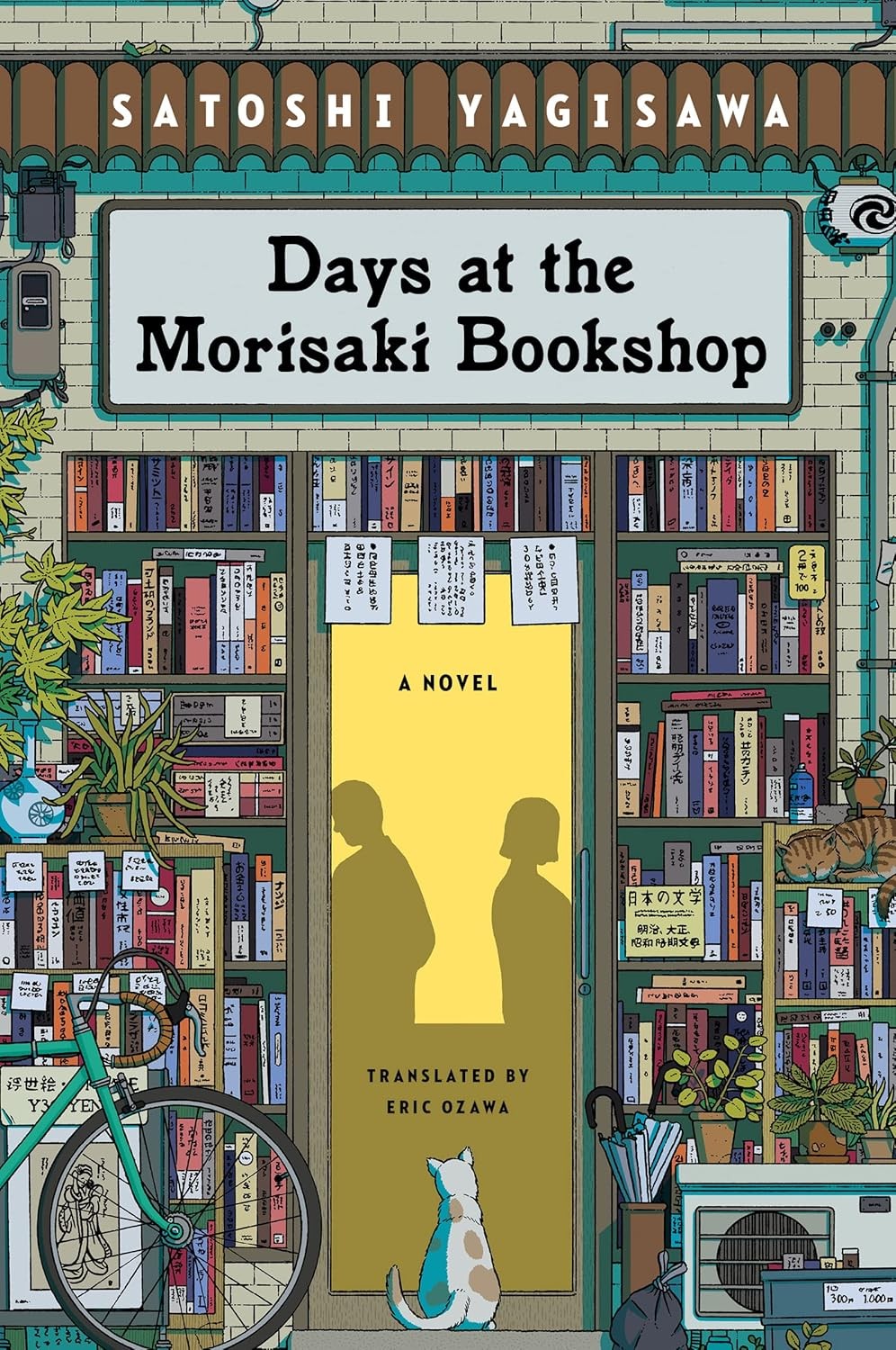
Days at the Morisaki Bookshop
Tags
In Stock
In stock: 2-5 days delivery
Ask about this book
Not sure if it's right for you?
Ask our assistant anything about Days at the Morisaki Bookshop.
Answers are AI-generated from this book's details and may not be perfect.
In the heart of Tokyo's Jimbocho district, where the air smells of old paper and streets are lined with bookshops both cozy and chaotic, there lies a small, dusty storefront: the Morisaki Bookshop. This secondhand bookshop, run by a gentle, eccentric uncle named Satoru, becomes the unlikely sanctuary for his niece Takako, a young woman adrift after a painful breakup. Days at the Morisaki Bookshop, the internationally beloved novel by Satoshi Yagisawa, is a quiet, luminous story about the slow, almost invisible process of healing when life seems to shatter completely.
Takako has always been a practical, sensible woman. She works a stable job, has a boyfriend she trusts, and assumes her life will unfold in predictable steps. But when her boyfriend confesses he is marrying another woman, the ground beneath her feet crumbles. She quits her job, retreats into grief, and accepts her uncle's offer to stay in the room above his bookshop. With nowhere else to go, she walks into a world she never knew existed.
The Jimbocho district is more than a setting; it is a character in itself. Known as Tokyo's book town, it is a labyrinth of narrow streets filled with hundreds of bookstores. Satoru is a quintessential Jimbocho bookseller: passionately knowledgeable, slightly disorganized, and more interested in discussing a novel's themes than in making a sale. His shop is stacked floor to ceiling with volumes of every genre. It is exactly the kind of place where a broken heart might find solace among forgotten stories and unexpected conversations.
As Takako settles into the rhythm of the bookshop, she discovers a community of fascinating people: Momo, the cheerful part-time volunteer; the taciturn old man who reads daily without buying; students hunting for rare texts; elderly couples seeking novels from their youth. Through these interactions, she slowly learns that life's small, everyday connections are as nourishing as grand declarations of love.
The novel unfolds at a gentle pace, mirroring Takako's inner recovery. She starts by simply existing among the books, not reading them. Then, almost without noticing, she picks up a novel and reads it in a single afternoon. Something stirs inside her. It is not a dramatic awakening but a quiet realization that the world of stories is vast and full of possibilities beyond her pain. Through reading, she reconnects with her imagination, her curiosity, and slowly, her capacity to hope.
At its core, Days at the Morisaki Bookshop is a meditation on the healing power of solitude, literature, and human connection. It gently suggests that we do not need oversized gestures to recover from heartbreak. Sometimes, all we need is a quiet room, a stack of books, and a few kind people. Takako's journey is about learning to be alone without being lonely, to find solace in characters on a page, and to understand that every ending makes room for a new beginning. The prose is spare and evocative, capturing the beauty of everyday moments: rain against the window, the smell of aging paper, the simple pleasure of a shared cup of tea.
For readers who love Japanese fiction by authors like Haruki Murakami, Toshikazu Kawaguchi, or Sayaka Murata, this novel offers a similar blend of introspection and cultural richness. But it stands apart in its unwavering focus on the physical and emotional environment of the bookshop. It is a love letter to the secondhand book trade, to the people who run these shops, and to the communities that sustain them. It celebrates the serendipity of browsing and the quiet thrill of sharing a beloved book with a stranger who might need it.
The mood is contemplative and deeply comforting, making it ideal for anyone going through a period of transition or grief. It does not shy away from sadness but wraps it in a warm embrace. Yagisawa's writing invites readers to slow down, pay attention to small details, and trust that healing often comes from unexpected places. It is the kind of novel that stays with you because of the quiet truths it whispers between the lines.
In the context of Sri Lanka's growing love for Japanese literature and introspective storytelling, Days at the Morisaki Bookshop arrives as a perfect companion for readers who crave stories about inner growth and the beauty of ordinary life. Sri Lankan readers, especially those navigating modern pressures, will find Takako's journey remarkably relatable. The novel speaks to universal emotions while offering glimpses into Tokyo's unique book culture.
This novel has garnered international acclaim for its tender portrayal of second chances and its lyrical tribute to the written word. For fans of Before the Coffee Gets Cold or The Little Paris Bookshop, it shares the same quiet, atmospheric magic and belief that books can mend broken hearts. It is not a fast-paced thriller. It is a slow, deliberate, loving story that asks nothing except to sit still and let the pages work their quiet magic.
This novel is also a tribute to the unsung heroes of the literary world: secondhand booksellers who spend their days surrounded by stories, connecting books with readers in need. Satoru is deeply human, with his own past pains and quiet wisdom. His relationship with Takako grows slowly, built on shared silences and small acts of kindness. By the end, you will feel as if you have lived above that bookshop, breathing in the dusty smell of old paper and learning to believe that even the most broken hearts can be rebuilt, page by page, day by day.
For Sri Lankan readers, the theme of community is especially resonant. Like Jimbocho, Sri Lanka has its own rich tradition of bookshops and reading groups. Days at the Morisaki Bookshop honors that tradition by curating stories that heal. It is a quiet invitation to find comfort in the written word, to trust that every story has its time, and to rediscover the gentle art of turning pages.
Healing is not linear, and it often happens in small increments. Sometimes, all it takes is a bookshop, a kind uncle, a few good books, and the courage to start reading again. Available now at Bookolog in Sri Lanka. Let this tender story find its way to you.
Key Takeaways
- A reminder that healing often comes not in big moments but in quiet days spent among stories.
- This book will appeal to anyone who has ever needed a gentle escape into a world of books.
- Takako's journey from heartbreak to rediscovery feels like a warm hug for the soul.
- The Morisaki Bookshop itself feels like a character, inviting readers to slow down and breathe.
- It celebrates the small, ordinary connections that quietly mend a broken heart.
Customer feedback
Reviews & Service Ratings
See what readers say about this book and our service.
Service rating
0.0/5
Please sign in to leave a review and rate our service.
No reviews yet. Be the first to rate this book and our service.
More from Satoshi Yagisawa
View All
You Might Also Like
Browse All








Products You May Like
Shop All




Bookolatha
Online · Bookolog assistant
Chat history
This chat stays available while you browse.
Log in to save and revisit multiple conversations.
Log in →Bookolatha is grounded in our catalogue and store info. Answers may not be perfect.