
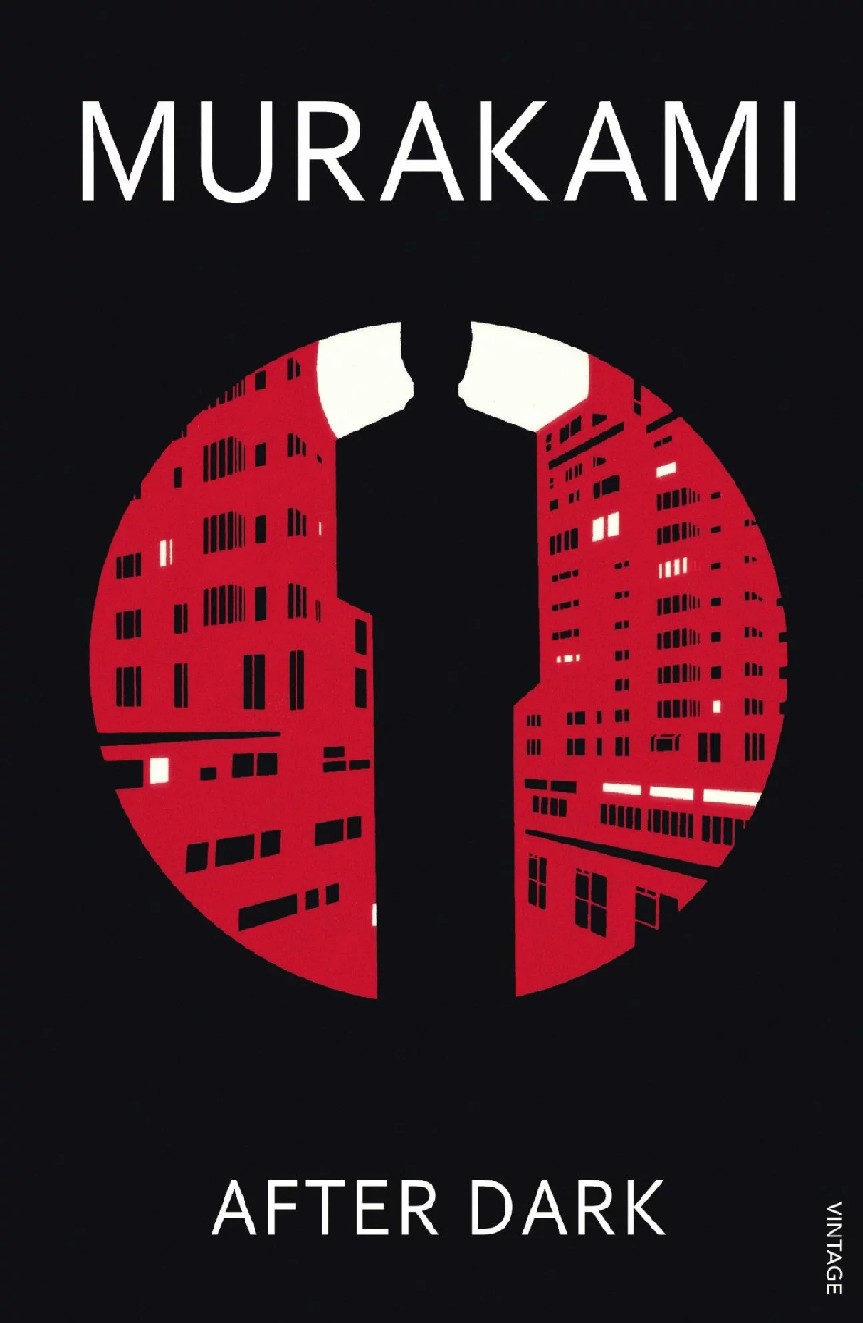
Click to enlarge
After Dark
Tags
Out of Stock
Currently unavailable
Currently unavailable: let us help you find it
Ask about this book
Not sure if it's right for you?
Ask our assistant anything about After Dark.
Answers are AI-generated from this book's details and may not be perfect.
In After Dark, Haruki Murakami transports readers to the liminal hours between midnight and dawn in Tokyo, a city transformed by neon glow and eerie silence. The narrative unfolds over a single night, structured around the passing hours from 11:56 PM to 6:52 AM, capturing the transient, dreamlike quality of urban life when ordinary rules feel suspended. Through concise yet evocative prose, Murakami explores the blurred boundaries between reality and fantasy, creating a haunting meditation on loneliness, connection, and the hidden currents that bind strangers in a sprawling metropolis.
The story centers on Mari, a young woman who spends her night reading in a 24-hour Denny's, evading sleep and her own unresolved emotions. Her solitude is interrupted by Takahashi, a trombone player who recognizes her from a past encounter involving her older sister, Eri. Eri lies in a mysterious sleep that resembles a coma, observed through a detached, cinematic lens that adds a layer of surrealism. This sleep becomes a portal to another realm, a television flickering to life and a spectral figure emerging from the screen, leaving the reader to ponder whether it represents escape, transcendence, or a descent into the subconscious.
As the night progresses, Mari and Takahashi engage in deep conversations that reveal their inner fears and aspirations, their dialogue a delicate dance of vulnerability and understanding. Around them, other characters emerge: a Chinese prostitute who suffers a brutal assault, the manager of a love hotel who becomes entangled in the aftermath, and a night-shift convenience store clerk. Murakami weaves these vignettes together, highlighting the invisible threads that connect strangers in a sprawling city, emphasizing how chance encounters can lead to profound personal insights and quiet acts of kindness.
The novel is rich with thematic depth, consistently examining isolation and alienation in modern urban environments. Mari's deliberate avoidance of sleep symbolizes a retreat from reality, while Eri's prolonged sleep represents an escape into dreams, mirroring the ways individuals cope with emotional disconnection. Murakami uses these metaphors to comment on the human condition, where technology and city life often exacerbate feelings of solitude. The setting of Tokyo after dark acts as a character in itself, its empty streets, flickering lights, and silent spaces creating a backdrop that is both familiar and alien, enhancing the novel's atmospheric tension and reinforcing the sense of transience that defines the characters' encounters.
Stylistically, After Dark is notable for its minimalist approach, relying on dialogue and internal monologues to drive the narrative forward. Murakami employs a rhythmic structure, with each chapter marking the passage of hours, which adds to the novel's meditative and haunting quality. The use of time as a structural element mirrors the fleeting nature of the characters' interactions, underscoring the transient moments that define human experience. Elements of magic realism are woven throughout, such as the surreal observations of Eri's sleep, allowing Murakami to explore subconscious desires and fears without abandoning the grounded reality of Tokyo's nightlife. The prose is lean yet evocative, with sensory details like the smell of coffee, the hum of fluorescent lights, and the distant sound of a train immersing readers in the environment.
Critics have praised After Dark for its evocative portrayal of nighttime Tokyo and its insightful exploration of human connections. While shorter than many of Murakami's other works, it packs a profound emotional punch, leaving readers to contemplate the nature of reality and the significance of seemingly mundane encounters. The book has been translated into multiple languages and remains a favorite among fans for its poetic and thought-provoking style. It also reflects Murakami's broader literary preoccupations, such as the search for meaning in a fragmented world and the interplay between the ordinary and the extraordinary.
For readers in Sri Lanka, After Dark offers a window into a world that is both distant and familiar. The bustling urban landscape of Tokyo, with its neon signs and crowded streets, contrasts with the quieter corners of Sri Lankan cities, yet the themes of isolation and the search for connection are universal. Bookolog is proud to offer this title to Sri Lankan readers who seek thought-provoking literature that transcends cultural boundaries. Its compact length makes it an ideal introduction to Murakami's style, while its depth ensures that even seasoned readers will find new layers with each reread. The novel's exploration of the night as a time of possibility and danger resonates with anyone who has ever lain awake in the small hours, pondering the mysteries of existence.
In conclusion, After Dark is a compelling tale that finds beauty and meaning in the darkness, offering a poignant reflection on how brief intersections can illuminate our deepest selves. Murakami's ability to blend the realistic with the surreal makes this novel a standout in contemporary literature, appealing to those interested in psychological depth and lyrical storytelling. Its enduring relevance lies in its universal themes of loneliness, hope, and the invisible bonds that tie us together, even in the most isolated of hours. For Sri Lankan readers, purchasing After Dark from Bookolog means acquiring not just a book, but a journey into the heart of what it means to be human, wrapped in the compelling aura of one of Japan's greatest storytellers.
Key Takeaways
- The quiet, liminal hours between midnight and dawn become a character themselves in this haunting Tokyo story.
- Murakami weaves together strangers' lives through chance encounters that reveal hidden desires and fears.
- A young woman's sleepless night in a Denny's sparks a journey into the surreal and the subconscious.
- This novel captures how urban isolation can be pierced by brief, meaningful connections under neon lights.
- Dream and reality blur as a sleeping woman becomes a portal to another realm, mirroring our own escapes.
Customer feedback
Reviews & Service Ratings
See what readers say about this book and our service.
Service rating
0.0/5
Please sign in to leave a review and rate our service.
No reviews yet. Be the first to rate this book and our service.
More from Haruki Murakami
View All

You Might Also Like
Browse All






Products You May Like
Shop All




Bookolatha
Online · Bookolog assistant
Chat history
This chat stays available while you browse.
Log in to save and revisit multiple conversations.
Log in →Bookolatha is grounded in our catalogue and store info. Answers may not be perfect.