
Click to enlarge
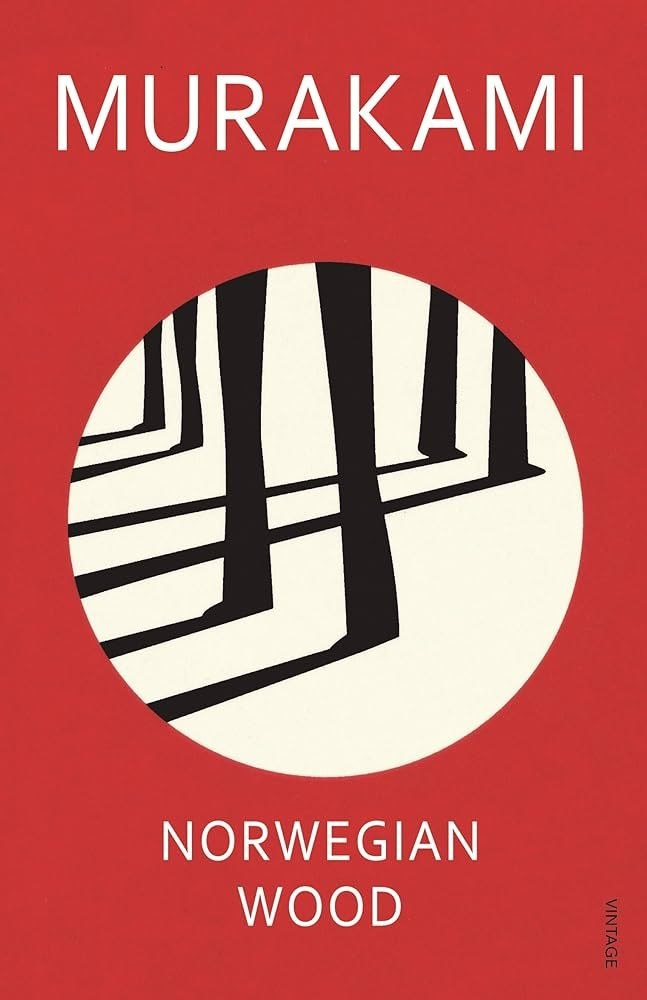
Norwegian Wood
Tags
In Stock
In stock: 2-5 days delivery
Ask about this book
Not sure if it's right for you?
Ask our assistant anything about Norwegian Wood.
Answers are AI-generated from this book's details and may not be perfect.
Norwegian Wood is a poignant, introspective novel that delves into the complexities of youth, love, and grief. Set against the vibrant yet tumultuous backdrop of 1960s Tokyo, the story is narrated by Toru Watanabe, who looks back on his college days with a blend of nostalgia and melancholy. The narrative opens as Toru hears the Beatles song 'Norwegian Wood,' which triggers memories of his past, particularly his relationship with Naoko, the girlfriend of his best friend Kizuki, who committed suicide. After Kizuki's death, Toru and Naoko grow closer, but Naoko is consumed by deep emotional trauma and eventually enters a sanatorium. Meanwhile, Toru meets Midori, a lively, assertive woman who contrasts sharply with Naoko's fragility. Throughout the novel, Murakami examines themes of loss, longing, and the struggle to find meaning in an often bewildering world.
The novel's 1960s Japanese setting is crucial, reflecting a period of social and political upheaval. Student protests and cultural shifts form a backdrop to Toru's personal struggles, highlighting generational conflict and the search for identity. Murakami's prose is lyrical and evocative, capturing the essence of youthful angst and the passage of time. Characters are deeply developed, each with their own arcs and inner conflicts. Toru's introspection allows readers to empathize with his dilemmas, while Naoko's mental health issues are portrayed with sensitivity and empathy. Midori's vitality brings dynamic energy, challenging Toru to embrace life despite its uncertainties. The novel also touches on broader philosophical questions about existence, memory, and the nature of love. Murakami's use of music, literature, and nature enhances thematic depth, making it a multifaceted read. Despite the somber tone, moments of humor and warmth balance the narrative.
Upon its publication, Norwegian Wood became a cultural phenomenon in Japan, catapulting Murakami to international fame. It has been translated into numerous languages and adapted into a film, testament to its universal appeal. The book resonates with readers for its honest portrayal of human emotions and the bittersweet experience of growing up. For those who appreciate literary fiction that weaves personal introspection with historical context, this novel offers a rich, rewarding experience. The mood is one of reflective melancholy, yet a thread of resilience runs through the story, making it both heartbreaking and uplifting.
The narrative structure is deceptively simple, but Murakami's masterful pacing and attention to detail create a world that feels both intimate and expansive. The first-person perspective allows readers to inhabit Toru's consciousness fully, experiencing his joys, sorrows, and confusion. This deep connection makes the novel's emotional beats profound and personal. Murakami's writing style, characterized by quiet elegance and precise imagery, transforms everyday moments into something significant. A walk through a park, a conversation over coffee, or shared silence with a friend becomes imbued with meaning.
One of the most striking aspects of the novel is its treatment of memory and time. Toru's narration is not linear but associative, moving between past and present as he tries to make sense of his experiences. This technique mirrors the way real memory works, emphasizing how the past continues to shape the present. The Beatles song 'Norwegian Wood' serves as a powerful metaphor for this process, as it carries the weight of a specific moment in Toru's life. The novel suggests that we can never truly escape our memories, but we can learn to live with them and find meaning in the scars they leave behind. The theme of mental health is handled with care; Naoko's struggles are depicted with empathy, avoiding sensationalism. Murakami does not offer easy answers but instead portrays the slow, often incomplete process of healing. In contrast, Midori's character brings a counterpoint: she is pragmatic, outspoken, and unafraid to confront life's absurdities. Her relationship with Toru is defined by honest conversations about love, sex, and death. These dialogues are among the most memorable in the book, offering insights into the human condition.
The novel also explores isolation and connection. Many characters in Norwegian Wood are isolated in some way: Kizuki by death, Naoko by her illness, Toru by his inability to fully commit, and Midori by her family responsibilities. Yet they all seek connection, often in awkward or painful ways. Murakami suggests that true intimacy requires vulnerability and a willingness to embrace uncertainty. Literary references woven into the narrative, such as Thomas Mann's 'The Magic Mountain' and F. Scott Fitzgerald's 'The Great Gatsby,' add an intertextual layer, inviting readers to consider how literature helps us understand our own lives. The music of The Beatles and other 1960s artists provides a soundtrack that anchors the story in its specific time and place, while also expressing emotions that transcend era.
For a global audience, Norwegian Wood serves as a window into Japanese culture during a time of rapid change. The novel captures the tension between tradition and modernity, seen in the contrast between Naoko's quiet, traditional manner and Midori's modern assertiveness. The setting of a boarding house, a university campus, and a remote sanatorium offers a rich backdrop that feels authentic and lived-in. Murakami's attention to detail, from descriptions of food to rituals of daily life, creates a palpable sense of place. The book's enduring popularity around the world is a testament to its universal themes. Readers appreciate the honest depiction of first love, the pain of losing a friend, and the struggle to find meaning. Norwegian Wood speaks to the part of us that remembers our own youth, with all its intensity and uncertainty. It is a novel that stays with you long after the last page, inviting reflection on your own journey through love and loss.
At Bookolog, we understand the value of a well-told story that touches the heart. This edition is perfect for bibliophiles, literature students, and anyone seeking a poignant reading experience. Whether you are discovering Murakami for the first time or returning to his work, Norwegian Wood offers a rich narrative that rewards multiple readings. Order your copy online in Sri Lanka at Bookolog, and let this timeless story accompany you on your own introspective journey. We take pride in bringing world-class literature to discerning readers, with fast, reliable delivery across the island.
Key Takeaways
- A tender and melancholic exploration of first love and how grief echoes through our lives.
- Murakami's quiet prose perfectly captures the ache of youth and the pull of memory.
- The contrast between Naoko’s fragility and Midori’s vitality creates a heartbreaking emotional tension.
- Set against 1960s Tokyo, it’s a deeply introspective story about loss, identity, and moving on.
- Readers who appreciate lyrical, character-driven novels about complicated love will find this unforgettable.
Customer feedback
Reviews & Service Ratings
See what readers say about this book and our service.
Service rating
0.0/5
Please sign in to leave a review and rate our service.
No reviews yet. Be the first to rate this book and our service.
More from Haruki Murakami
View All

You Might Also Like
Browse All







Products You May Like
Shop All




Bookolatha
Online · Bookolog assistant
Chat history
This chat stays available while you browse.
Log in to save and revisit multiple conversations.
Log in →Bookolatha is grounded in our catalogue and store info. Answers may not be perfect.