
Click to enlarge
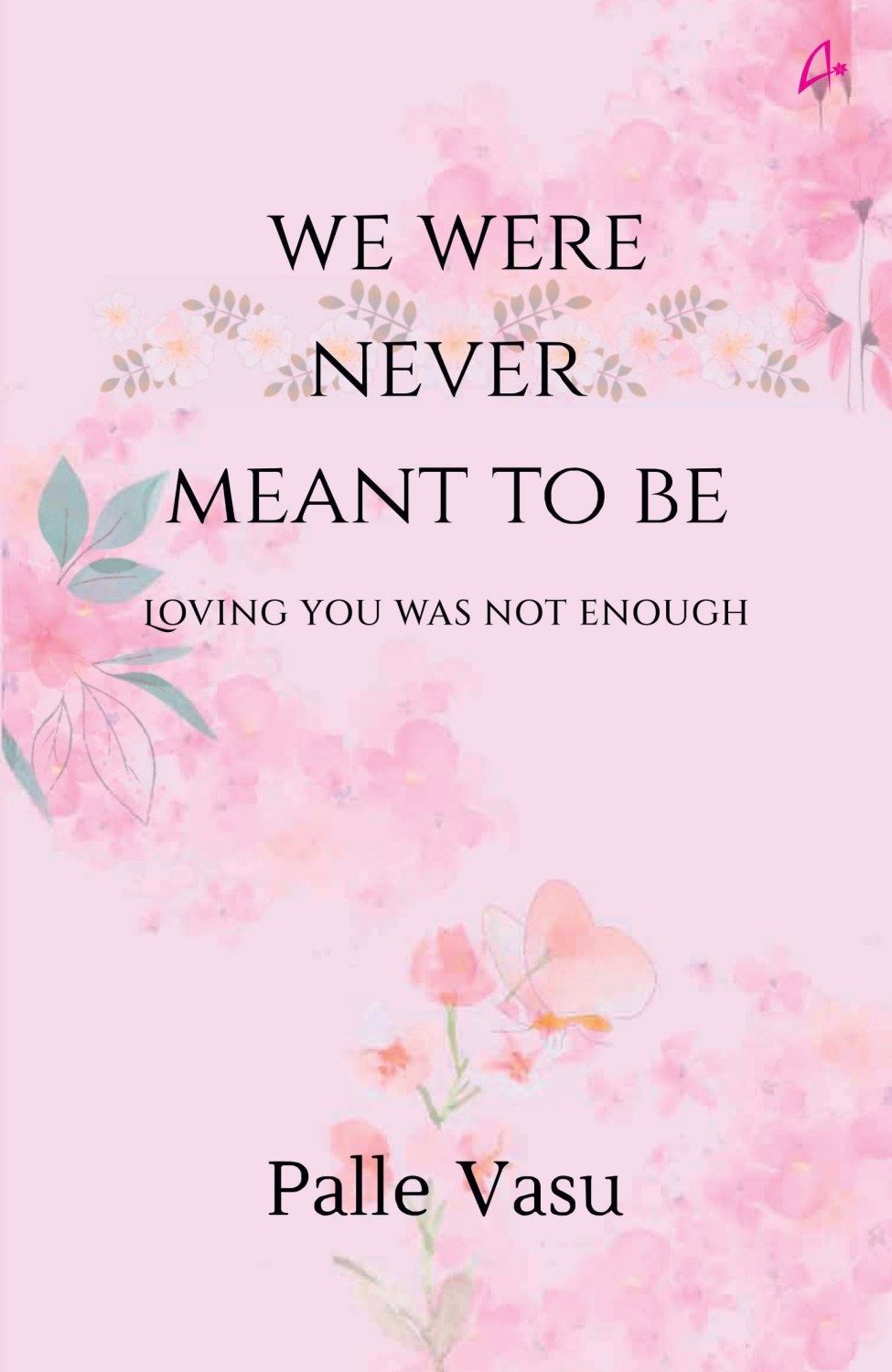
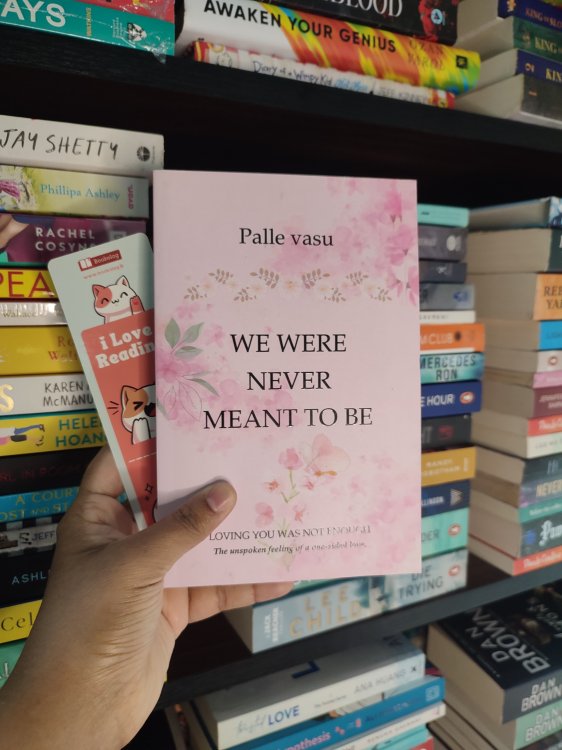
We Were Never Meant to Be
Tags
In Stock
In stock: 2-5 days delivery
Ask about this book
Not sure if it's right for you?
Ask our assistant anything about We Were Never Meant to Be.
Answers are AI-generated from this book's details and may not be perfect.
In We Were Never Meant to Be, Palle Vasu delivers a masterful exploration of love, identity, and the weight of tradition set against the vibrant backdrop of modern Sri Lanka and beyond. The novel follows Anya, a fiercely independent artist haunted by a past loss, and Rohan, a pragmatic engineer bound by familial duty, whose serendipitous meeting in a bustling city ignites a connection that challenges every expectation. Vasu's narrative voice is both poetic and precise, weaving together the intimate struggles of two souls caught between personal desires and societal obligations. This is not merely a romance; it is a profound meditation on the forces that shape our choices and the spaces where fate and free will collide.
Anya channels her grief into her paintings, using art as both a sanctuary and a source of conflict. Her childhood loss left her fearful of attachment, a wound that reopens as her relationship with Rohan deepens. Rohan, in contrast, is a man of structure and logic, his life meticulously planned by his conservative family. His sense of duty often suppresses his own desires, leading to a quiet rebellion. The alternating perspectives allow readers to inhabit both minds, fostering empathy for their disparate journeys. This duality reflects the broader tension between tradition and modernity that permeates Sri Lankan society.
The setting becomes a character itself. The metropolis where Anya and Rohan meet is alive with chaotic markets, crowded streets, and quiet corners for secret conversations. Vasu paints this urban landscape vividly, capturing the sensory overload of honking buses and the aroma of street food. As the story progresses, the action moves to rural retreats: a serene coastal village and a misty hill station. These locations symbolize the characters' emotional states - the city represents possibility and pressure, while the countryside offers solace and reflection. For Sri Lankan readers, these settings feel intimately familiar, grounding universal themes in an authentic local context.
Supporting characters enrich the narrative without overshadowing the central couple. Anya's mentor, a retired professor with wry humor, offers wisdom about impermanence, often quoting ancient poetry. Rohan's mother is a formidable presence, her expectations shaped by tradition and sacrifice. Another subplot involves Rohan's younger sister navigating her own forbidden love, exploring generational shifts in attitudes toward marriage and independence. These characters are fully realized, their stories echoing the main narrative to create a rich tapestry of interconnected lives.
Symbolism is woven delicately throughout. Bridges appear repeatedly, representing connection and the precarious nature of crossing from one state to another. Thresholds mark moments of decision where characters must choose between safety and risk. Vasu uses light and shadow to reflect moods, with sunlit scenes giving way to stormy interiors. Nature mirrors emotion: a sudden rainstorm during a pivotal argument, the calm of a lake during reconciliation. These devices elevate the story, inviting readers to find meaning in details, much like Anya interpreting her own paintings.
The emotional arc builds with careful pacing. Early chapters capture the heady rush of new love, but as external pressures mount, the tone shifts. Family conflicts erupt, career ambitions create strain, and societal judgments become impossible to ignore. Vasu does not shy away from messy realities: misunderstandings, unspoken resentments, and the weight of expectations are depicted with unflinching honesty. One intense scene involves a family dinner where every word is a battleground, the tension palpable even in descriptions of food and decor.
Mental health is another thread. Anya's past trauma manifests as anxiety, and her struggle to maintain emotional equilibrium is portrayed without stigma. Rohan grapples with the psychological cost of living a double life. Vasu handles these issues with sensitivity, showing how love can be both a healing force and a trigger. This contemporary relevance makes the book appealing to modern readers, including young professionals in Sri Lanka facing dilemmas between personal fulfillment and familial duty.
The climax is a master class in suspense. Vasu builds toward revelations that test the characters in unforeseen ways. Without giving spoilers, the resolution is both heartbreaking and hopeful. The ending does not offer easy answers but invites reflection on the nature of love and sacrifice. The final pages linger, prompting readers to reconsider their own paths and the choices that define them.
We Were Never Meant to Be will appeal to readers who appreciate literary fiction with strong emotional cores. Fans of authors like Jhumpa Lahiri or Chimamanda Ngozi Adichie will find similar themes of diaspora, cultural conflict, and the search for self. The novel also attracts book clubs, with rich thematic material that invites discussion. For the Sri Lankan market, the book resonates because it mirrors tensions many face in a rapidly changing society. Bookolog, as a leading online bookstore in Sri Lanka, is proud to offer this title to readers seeking stories that reflect their own lives while providing a window into universal human experiences.
Vasu's prose is a standout feature. Each sentence balances lyrical beauty with clarity. Descriptions of a sunset, a conversation, or a memory are rendered with vividness that makes the reader feel present. Dialogue is natural, capturing the cadence of everyday speech while revealing character. Metaphors are used sparingly but effectively, ensuring every image serves the story. This attention to language makes the book a pleasure to read, even as it tackles difficult subjects.
The theme of destiny versus free will runs like a river through the novel. Are Anya and Rohan meant to be together, or are they fighting an inevitable fate? The title poses this question, and the narrative offers a nuanced answer: while circumstances may be beyond our control, our responses define us. This philosophical undercurrent gives the story weight without becoming heavy-handed. It is a meditation on the human condition, accessible to all readers.
Palle Vasu is an author to watch. With We Were Never Meant to Be, he has established himself as a powerful voice in contemporary fiction, blending personal drama with social commentary. He writes about love in a way that feels new yet timeless. For readers in Sri Lanka, this book is a treasure, a story that speaks to their reality while transcending it. Available at Bookolog, it is a must-read for anyone who believes in the power of fiction to illuminate truth.
Key Takeaways
- A poignant exploration of whether love can survive when families and traditions pull in opposite directions.
- This story will make you reflect on the weight of personal choices and the role of fate in relationships.
- The alternating perspectives between Anya and Rohan reveal how communication and compromise shape a bond.
- Vasu’s vivid settings and symbolic imagery deepen the sense of longing and the search for identity.
- An emotionally honest look at how some connections, even if fleeting, leave lasting marks on who we become.
Customer feedback
Reviews & Service Ratings
See what readers say about this book and our service.
Service rating
0.0/5
Please sign in to leave a review and rate our service.
No reviews yet. Be the first to rate this book and our service.
You Might Also Like
Browse All


Products You May Like
Shop All



Bookolatha
Online · Bookolog assistant
Chat history
This chat stays available while you browse.
Log in to save and revisit multiple conversations.
Log in →Bookolatha is grounded in our catalogue and store info. Answers may not be perfect.