
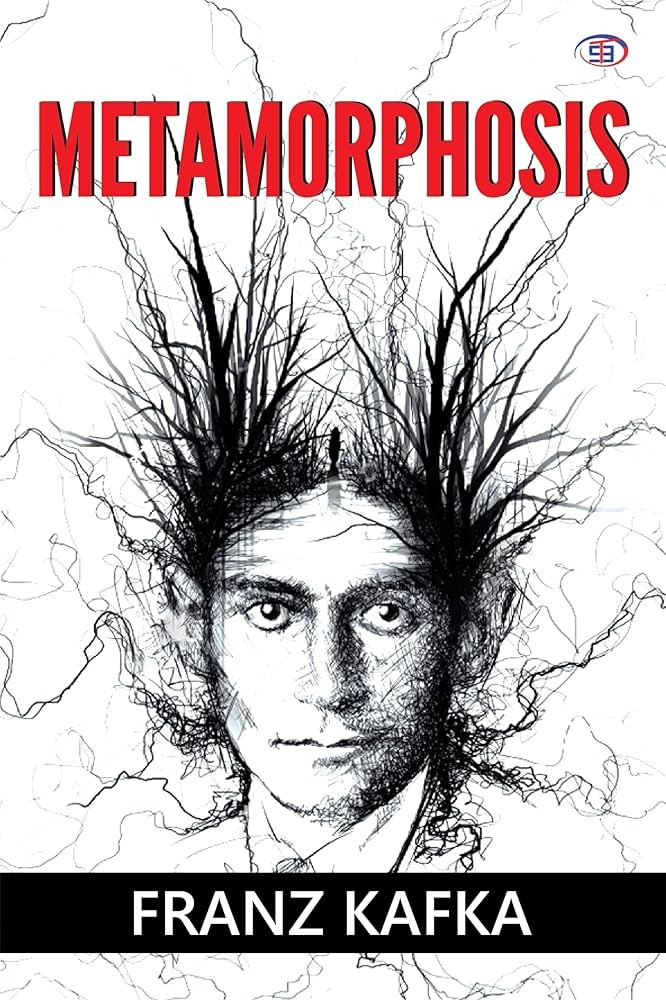
Click to enlarge
The Metamorphosis
Tags
Out of Stock
Currently unavailable
Currently unavailable: let us help you find it
Ask about this book
Not sure if it's right for you?
Ask our assistant anything about The Metamorphosis.
Answers are AI-generated from this book's details and may not be perfect.
The Metamorphosis, penned by Franz Kafka and first published in 1915, is a landmark novella that opens with one of literature's most famous premises: Gregor Samsa, a traveling salesman, awakens to find himself inexplicably transformed into a monstrous insect. This surreal event sets the stage for a profound exploration of human isolation, identity, and the absurdities of modern life. Kafka's precise, unflinching prose heightens the emotional and philosophical weight, making it a cornerstone of existential and modernist fiction. For readers in Sri Lanka seeking literature that challenges reality's boundaries, The Metamorphosis offers an unforgettable journey into human vulnerability.
The plot unfolds almost entirely within the Samsa family apartment, mirroring Gregor's trapped existence. As the sole breadwinner for his parents and sister Grete, his transformation shatters their economic stability and emotional dynamics. Initially, his family reacts with shock and tentative care, but gradually compassion erodes into neglect and resentment. Gregor, struggling to communicate, becomes a prisoner in his room, symbolizing deepening alienation from the human world. Kafka uses this setup to critique the dehumanizing effects of capitalist labor, where worth is tied to productivity. In a Sri Lankan context, this resonates with those facing economic survival pressures and familial duty expectations, inviting reflection on how modern work culture strips individuals of humanity.
Central to the novella is alienation. Gregor's physical metamorphosis externalizes his internal disconnection from job and family. Before, he suffered a monotonous career; afterwards, he is reduced to an insect, highlighting how society discards nonconformists. His family's evolving response from dependence to rejection underscores love's conditionality in a materialistic world. Grete's transition from caring sister to pragmatic adult who sees Gregor as a burden is particularly poignant. This dynamic mirrors isolation within close communities when a member becomes non-productive. For Sri Lankan readers, it evokes social pressures to adhere to success norms and the stigma of deviation.
Kafka delves into the absurdity of existence. The transformation occurs without explanation, reflecting life's irrational nature. Gregor's gradual acceptance contrasts with his family's adaptation, adding irony and tragedy. His death from neglect and a symbolic apple injury inflicted by his father is a quiet, bleak climax that brings relief to the family, who then look toward a hopeful future. This ending forces readers to confront uncomfortable questions about morality and human cruelty. In Sri Lanka, where upheavals can upend lives without warning, Kafka's absurdity offers philosophical solace: meaning is not inherent but must be forged in chaos.
The novella is rich with symbolism. Gregor's insect form represents inferiority and marginalization. The locked door signifies barriers, while the apple lodged in his back embodies familial aggression and guilt. Kafka's mundane details - financial discussions, Grete's violin playing - contrast with the surreal premise, enhancing thematic depth. The apple serves as a powerful image of love souring into violence, a motif transcending cultures. For Sri Lankan readers familiar with fruit as sustenance and symbol, the apple as a weapon of rejection adds poignancy. The family's attempt to resume normalcy after Gregor's death suggests cyclical erasure of those who disrupt order.
The Metamorphosis also offers a sharp critique of family dynamics and social expectations. Gregor's parents, initially helpless, regain control by ostracizing him, illustrating how conformity is enforced through exclusion. Grete's own metamorphosis into a self-assured young woman suggests personal growth at empathy's expense. The father's transformation from passive to aggressive mirrors power shifts when roles are disrupted. In Sri Lankan households with often rigid hierarchy, these dynamics may prompt readers to examine the cost of defying predefined roles.
In literary history, the novella helped shape existentialist thought, inspiring Sartre and Camus, and coined the term 'Kafkaesque' for surreal bureaucracy. Its exploration of identity and alienation resonates in contemporary discussions about mental health and social isolation. The term is all too familiar in Sri Lanka, whether in government offices or corporate labyrinths. Reading The Metamorphosis is thus a way to name and understand the disorienting structures of modern life.
Kafka's style is deceptively simple: clear, direct sentences building unease and dread. The contrast between ordinary language and extraordinary events creates a chilling effect. For newcomers, the novella is an accessible entry; for seasoned readers, it offers endless interpretive layers. The widely used translation by Willa and Edwin Muir preserves the starkness of the original German. Bookolog recommends the Penguin Modern Classics edition for its authoritative text and insightful introduction.
The mood is one of claustrophobic tension and melancholy. Kafka alternates between Gregor's interior thoughts and the family's external reactions, drawing readers into a sensory world: the feel of his new body, hushed voices, food smells. The climax - Gregor's death - is delivered matter-of-factly, yet its impact lingers. The final image of the family taking a tram ride into spring countryside suggests renewal built on erasure of the inconvenient other, a bittersweet conclusion questioning whose happiness is valued.
The Metamorphosis appeals to a wide audience. Students of literature and philosophy will find rich themes; general readers will be captivated by narrative tension and emotional depth. It is often assigned in school curricula, sparking discussions about family, duty, and self-worth. In Sri Lanka, where English literature is widely taught, the novella is a common text. For fans of existentialist fiction, absurdist humor, or psychological thrillers, it delivers a compact yet profound experience. It pairs well with works by Camus, Sartre, or Haruki Murakami, who blend the surreal with the mundane.
The novella's relevance extends to mental health awareness. Gregor's transformation can be read as a metaphor for depression, disability, or chronic illness, where the sufferer feels cutoff and misunderstood. The family's care trajectory mirrors real caregiving situations, highlighting compassion's fragility. This perspective adds contemporary urgency, valuable for discussions about empathy and social responsibility. In Sri Lanka, where mental health awareness is growing, the novella can foster conversations about invisible burdens and community support.
Written just before World War I, The Metamorphosis reflects anxieties of a world on the brink of collapse. Kafka, a German-speaking Jew in Prague, navigated multiple identities, and his work responds to fragmentation of traditional structures. This historical context enriches the reading, connecting personal with political. For Sri Lankan readers who have experienced their own transformations - from colonial rule to civil war to economic shifts - the novella offers a lens to examine change's effects on identity.
Ultimately, The Metamorphosis is more than a bizarre tale; it is a powerful allegory for the human condition. Kafka's blend of the ordinary and grotesque invites readers to reflect on their vulnerabilities and societal pressures. Its enduring relevance lies in its unflinching look at what it means to be human faced with incomprehensible change, making it essential for anyone interested in literary fiction. For those in Sri Lanka seeking a copy, Bookolog offers easy delivery across the island, ensuring this classic reaches your bookshelf. Whether for academic study, personal enrichment, or as a gift, The Metamorphosis promises a lifetime of contemplation. Order your copy from Bookolog today and step into Kafka's world, where the most ordinary morning can become extraordinary.
Key Takeaways
- A haunting look at how quickly family bonds can fray when someone becomes a burden they can't manage.
- Kafka's tale captures the crushing loneliness of feeling like an outsider in your own home and body.
- This novella forces you to question what gives a life value when work and usefulness are stripped away.
- The apple thrown by Gregor's father becomes a powerful symbol of guilt and rejection that lingers long after reading.
- An unsettling reminder that our deepest fears of being misunderstood and discarded can take the most surreal forms.
Customer feedback
Reviews & Service Ratings
See what readers say about this book and our service.
Service rating
0.0/5
Please sign in to leave a review and rate our service.
No reviews yet. Be the first to rate this book and our service.
More from Franz Kafka
View All

You Might Also Like
Browse All





Products You May Like
Shop All




Bookolatha
Online · Bookolog assistant
Chat history
This chat stays available while you browse.
Log in to save and revisit multiple conversations.
Log in →Bookolatha is grounded in our catalogue and store info. Answers may not be perfect.