
Click to enlarge
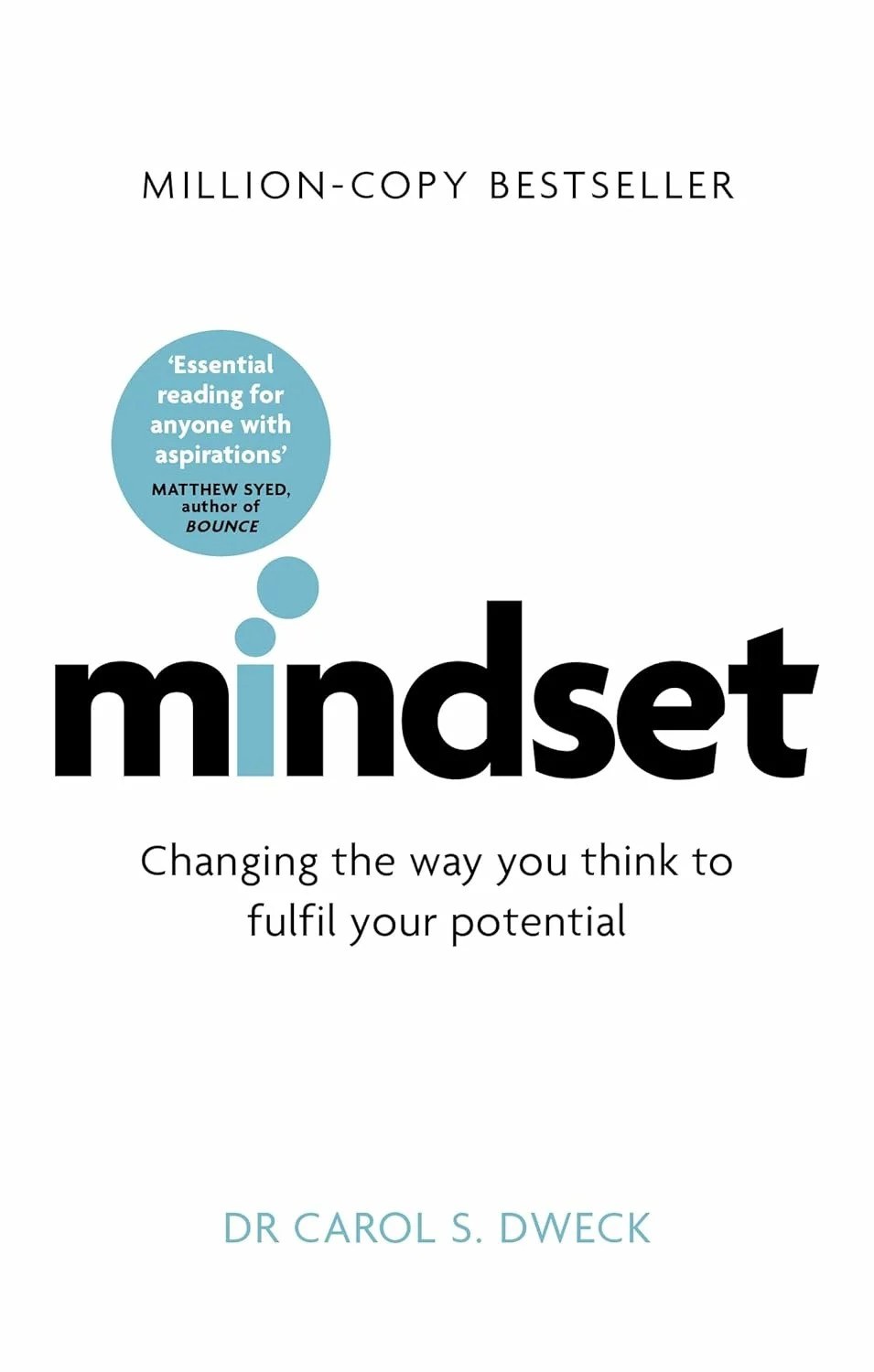
Mindset: The New Psychology of Success
Tags
Pre-Order
Pre-order: 2-3 months delivery time
Ask about this book
Not sure if it's right for you?
Ask our assistant anything about Mindset: The New Psychology of Success.
Answers are AI-generated from this book's details and may not be perfect.
In Mindset: The New Psychology of Success, Dr. Carol S. Dweck presents a revolutionary idea that has reshaped our understanding of human potential. Drawing on decades of groundbreaking research, she identifies two fundamental mindsets that drive how we approach life: the fixed mindset and the growth mindset. A fixed mindset assumes that our intelligence, talents, and abilities are static traits. People with this view believe they are born with a certain amount of intelligence and that success is a matter of proving that inherent worth. In contrast, a growth mindset thrives on challenge and sees failure not as evidence of unintelligence but as a springboard for growth and stretching existing abilities. This simple yet powerful distinction has profound implications for every area of life, from education and career to relationships and personal development.
Dweck's journey into this research began with a simple question: why do some people become paralyzed by failure while others use it as a catalyst? Her studies with children, college students, professionals, and athletes revealed that the answer lies not in innate talent but in how people interpret success and setbacks. The fixed mindset leads to avoidance of challenges because difficulty threatens self-image. The growth mindset embraces effort as the path to mastery and sees obstacles as opportunities to learn.
The book opens with a vivid exploration of these mindsets in the classroom. Dweck recounts experiments where students were praised for their intelligence versus their effort. Those praised for intelligence shied away from difficult tasks for fear of losing their smart label, while those praised for effort welcomed harder problems and persisted longer. This crucial finding has reshaped parenting and teaching practices worldwide. Parents and educators who adopt a growth mindset language focus on process, strategy, and improvement rather than labeling children as smart or gifted. The result is a love of learning and resilience that fuels long-term achievement.
Beyond the classroom, Mindset dives into the world of sports. Dweck analyzes iconic athletes like Michael Jordan, Tiger Woods, and John McEnroe. Jordan, famously cut from his high school basketball team, used that failure as fuel for relentless practice, embodying a growth mindset. McEnroe, on the other hand, displayed a fixed mindset early in his career, blaming external factors for his losses and avoiding situations that might expose his weaknesses. Over time, McEnroe learned to adopt a more growth-oriented perspective, leading to greater satisfaction and success. The message is clear: growth mindset athletes practice more, recover from setbacks faster, and often outperform those with more innate talent but a fixed mindset.
In the business arena, Dweck explores how mindsets shape corporate culture. Companies led by fixed-mindset CEOs often prioritize personal genius and create environments of fear, where employees hesitate to take risks or admit mistakes. In contrast, growth-mindset leaders like Jim Collins and Satya Nadella have transformed organizations by fostering a culture of learning, collaboration, and innovation. Nadella revived Microsoft by encouraging a 'learn-it-all' attitude over a 'know-it-all' one. Dweck provides vivid case studies of Enron, which collapsed under the weight of a fixed-mindset culture that valued genius over ethics, and of companies that thrived by embracing effort and feedback.
Relationships are also deeply influenced by mindset. Dweck shows that fixed mindsets in romantic partnerships lead to a belief that love is constant and that problems indicate a fatal flaw. This belief causes conflict avoidance, blame, and stagnation. Growth-minded couples see relationships as evolving entities requiring effort, communication, and mutual growth. Similarly, in friendships and family dynamics, a growth mindset fosters empathy, forgiveness, and deeper connection.
One of the most compelling aspects of Mindset is its grounding in neuroscience. Dweck discusses how the brain's plasticity allows it to grow and reorganize itself through experience. Each time we stretch ourselves, we create new neural connections, making previously impossible tasks achievable. This scientific foundation reinforces the growth mindset: abilities are not fixed at birth; they can be cultivated through dedicated effort. Dweck translates this into practical advice, encouraging readers to view challenges as brain workouts and to celebrate the process of learning rather than just the outcome.
The book also addresses the pitfalls of a false growth mindset. Some people claim to hold a growth mindset but still exhibit fixed behaviors, such as praising ability or avoiding honest feedback. Dweck guides readers to check themselves: are you truly open to learning, or are you just using growth mindset language? She offers a self-audit and strategies to align actions with beliefs. This honest reflection is essential for genuine transformation.
In the final chapters, Dweck outlines how to apply the growth mindset to everyday life. She introduces the concept of 'the power of yet' - a simple shift from 'I can't do this' to 'I can't do this yet.' This linguistic change opens the door to possibility and perseverance. She also emphasizes the importance of embracing challenges, learning from criticism, and finding inspiration in the success of others. Each chapter ends with exercises and reflections that make the ideas actionable.
For readers in Sri Lanka, Mindset offers a particularly timely message. In a culture that often emphasizes exams, grades, and external validation, the growth mindset provides a liberating alternative. Students can learn to value effort over innate ability, reducing anxiety and fostering a lifelong love of learning. Professionals can break free from the fear of failure and innovate in their fields. Parents and teachers can raise a generation of resilient children who embrace challenges. Bookolog, as a premier online bookstore in Sri Lanka, makes this transformative book accessible to anyone eager to unlock their potential.
Ultimately, Mindset: The New Psychology of Success is more than a book; it is a paradigm shift. Carol Dweck's research shows that we have a choice in how we interpret our experiences. By adopting a growth mindset, we can overcome the limitations of fixed thinking and achieve things we once thought impossible. The book has inspired millions around the world, appearing in corporate training programs, school curricula, and personal development libraries. Its messages are backed by rigorous science and delivered with warmth, storytelling, and practical wisdom. For anyone ready to take control of their growth, this is the essential starting point. Available in Sri Lanka through Bookolog, it invites you to begin your own journey of continuous improvement and lasting success.
Key Takeaways
- This book shows how believing your abilities can grow leads to greater resilience and achievement in all areas of life.
- It offers practical ways to shift from a fixed mindset that avoids challenges to a growth mindset that embraces them.
- The research on how praise for effort rather than intelligence can foster a lifelong love of learning is eye-opening.
- Dweck’s insights into how mindset shapes our relationships, from handling conflict to building stronger bonds, are invaluable.
- Mindset reveals that our brain is malleable and that we can change our fundamental approach to learning and success.
Customer feedback
Reviews & Service Ratings
See what readers say about this book and our service.
Service rating
0.0/5
Please sign in to leave a review and rate our service.
No reviews yet. Be the first to rate this book and our service.
You Might Also Like
Browse All




Products You May Like
Shop All




Bookolatha
Online · Bookolog assistant
Chat history
This chat stays available while you browse.
Log in to save and revisit multiple conversations.
Log in →Bookolatha is grounded in our catalogue and store info. Answers may not be perfect.