
Click to enlarge
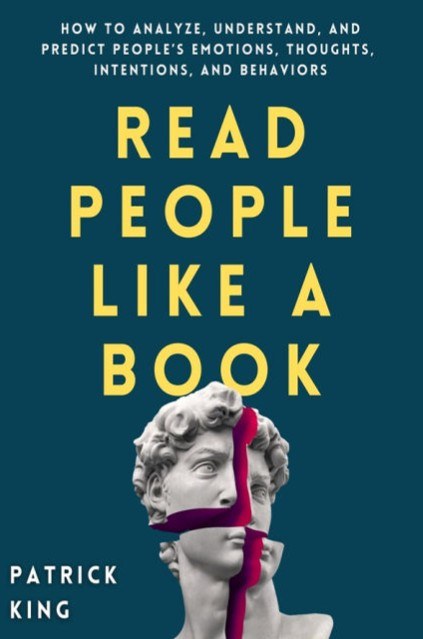
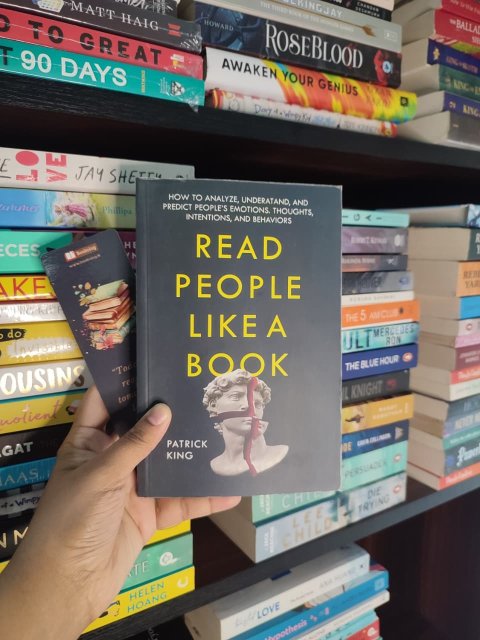
Read People Like a Book
Tags
In Stock
In stock: 2-5 days delivery
Ask about this book
Not sure if it's right for you?
Ask our assistant anything about Read People Like a Book.
Answers are AI-generated from this book's details and may not be perfect.
In an era where communication is filtered through screens, the ability to decipher unspoken messages has never been more critical. Read People Like a Book by Patrick King is a transformative toolkit that unlocks the hidden dimensions of human interaction. With psychological rigor and accessible storytelling, this book empowers readers to move beyond surface conversation and tap into the rich realm of nonverbal communication. Whether you are a business leader reading a room during negotiations, a parent understanding a teenager's silent anxieties, or someone navigating modern social life, King's insights offer a path to deeper connection and enhanced intuition.
The book explores the science behind body language, facial expressions, voice modulation, and spatial dynamics. King draws from decades of research, including Paul Ekman's work on microexpressions and Edward T. Hall on proxemics, distilling complex concepts into practical cues. It begins with understanding baseline behavior-what is normal for an individual-and then teaches readers to detect deviations that signal emotional shifts, discomfort, deception, or excitement. This approach avoids assigning universal meanings to isolated gestures and promotes context-driven analysis.
A strength of the book is its emphasis on the cluster principle: reliable interpretation requires observing multiple cues together. For instance, a person looking away may be shy, lying, or thinking-but paired with a tightened jaw, shift in posture, and change in vocal pitch, the meaning becomes clearer. King provides chapters on eye movements, hand gestures, leg positioning, and breathing patterns, supported by real-world examples. He also delves into microexpressions-fleeting involuntary facial movements that reveal genuine emotions like fear, anger, or joy. Training readers to spot these signals turns the casual observer into a skilled interpreter.
Practical application is woven throughout. Readers are guided through exercises to build observation habits, such as people-watching or analyzing recorded interactions, with self-assessment tools. King includes scripts for active listening combined with nonverbal assessment, encouraging testing in low-stakes environments. The book also addresses cultural variation, acknowledging that gestures and norms differ across societies. For a diverse country like Sri Lanka, where Sinhalese, Tamil, Muslim, and other communities interact daily, this cultural sensitivity is invaluable. King dedicates a section to cross-cultural communication, explaining how eye contact, personal space, and hand gestures vary, offering strategies to adapt reading skills without stereotyping.
Beyond mechanics, Read People Like a Book champions an ethical framework: the goal is understanding, not manipulation. King advocates using insights to build empathy, resolve conflicts, and foster rapport. In professional settings, this means recognizing when a colleague needs support rather than pressure. In personal relationships, it transforms communication, helping partners read unspoken needs. The tone is uplifting, reminding readers that social intelligence creates meaningful connections.
One chapter explores reading people through text messages, emails, and video calls. King advises on analyzing word choice, response times, and video call behavior, while cautioning against over-interpretation. This section is essential for remote workers and those navigating online relationships.
The book debunks common myths about body language. King challenges the idea that lying is detected by nose touching or gaze aversion, explaining these may indicate anxiety or cognitive load. He introduces 'hot spots'-clusters of behavior under emotional arousal-teaching readers to analyze them in context. This sophisticated skill set improves with practice.
For those who have felt socially awkward, this book offers a path to confidence. It reassures that social intelligence is a learnable skill. The exercises are enjoyable, turning everyday encounters into growth opportunities. King's writing is engaging and conversational, with anecdotes from his life that bring lessons to life.
The book integrates emotional intelligence, self-awareness, and active listening. To read others accurately, one must understand one's own biases and emotional triggers. Journaling prompts and reflection exercises guide this introspection. Readers learn to align their body language with intentions, projecting confidence and authenticity.
Applications span business (improving sales, interviews, leadership), education (reading student engagement), and healthcare (recognizing unspoken pain). King provides case studies from each domain. For readers in Sri Lanka, where industries digitize and social dynamics are culturally influenced, these lessons are especially relevant. Bookolog, the premier online bookstore in Sri Lanka, offers this book as a resource for thriving in a multifaceted landscape.
The book closes with a reminder that reading people is a gift to handle with care. King encourages using skills to uplift others, listen deeply, and bridge gaps. Read People Like a Book is an invitation to become a more present, perceptive, and compassionate human being. For those ready to take that journey, purchase your copy from Bookolog, the trusted destination for transformative books in Sri Lanka. With fast delivery across Colombo and the island, Bookolog makes it easy to start unlocking the secrets of human interaction today.
Key Takeaways
- Learn to spot microexpressions and other fleeting facial cues that reveal true feelings.
- Understand how to read clusters of body language rather than relying on single gestures.
- Discover how to adapt your reading skills to different cultural and social contexts.
- Gain practical techniques for observing baseline behavior to detect deception or discomfort.
- Use ethical nonverbal insights to improve empathy and communication in relationships.
Customer feedback
Reviews & Service Ratings
See what readers say about this book and our service.
Service rating
0.0/5
Please sign in to leave a review and rate our service.
No reviews yet. Be the first to rate this book and our service.
You Might Also Like
Browse All




Products You May Like
Shop All




Bookolatha
Online · Bookolog assistant
Chat history
This chat stays available while you browse.
Log in to save and revisit multiple conversations.
Log in →Bookolatha is grounded in our catalogue and store info. Answers may not be perfect.