
Click to enlarge
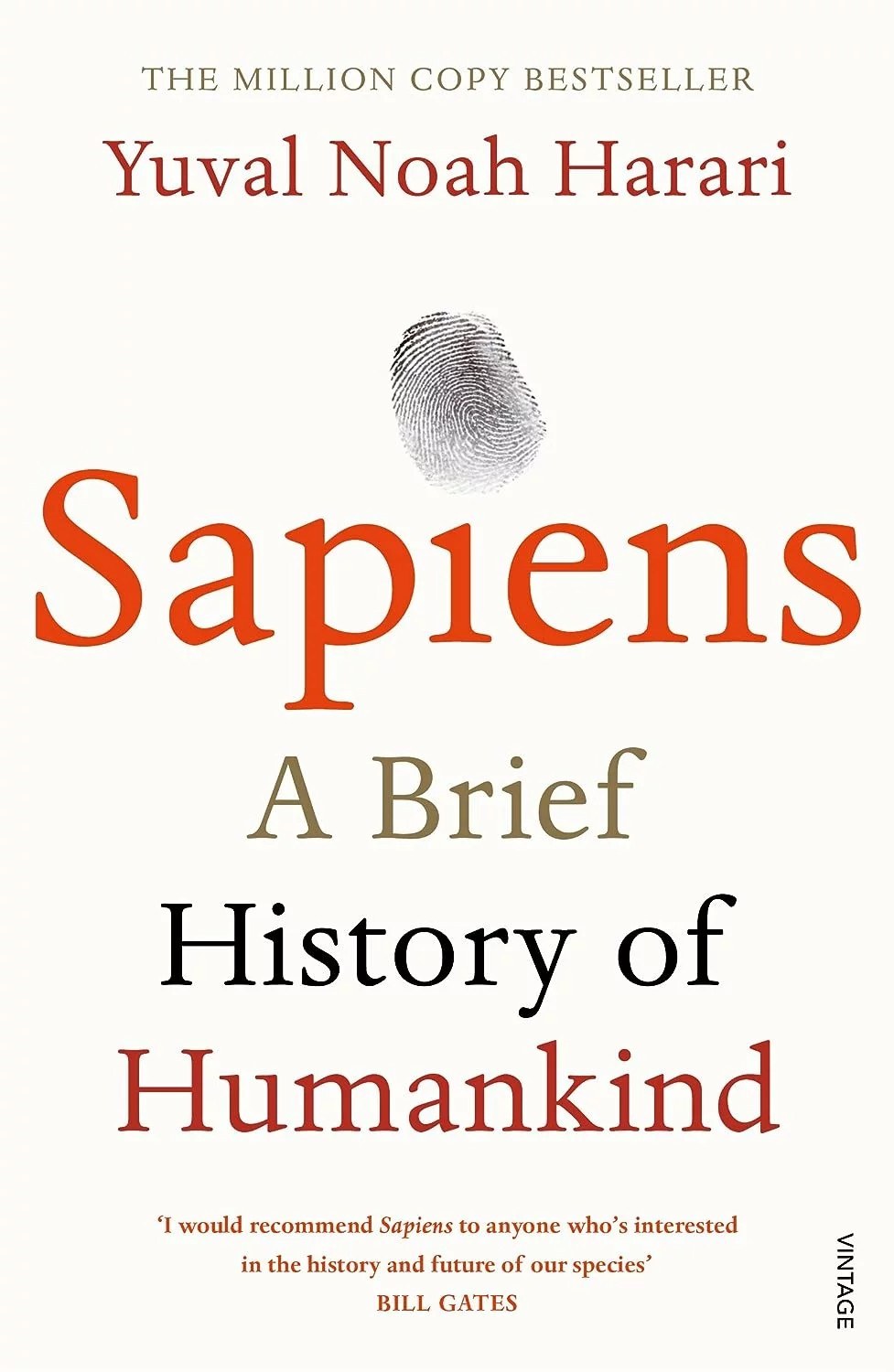
Sapiens: A Brief History of Humankind
Tags
In Stock
In stock: 2-5 days delivery
Ask about this book
Not sure if it's right for you?
Ask our assistant anything about Sapiens: A Brief History of Humankind.
Answers are AI-generated from this book's details and may not be perfect.
In Sapiens: A Brief History of Humankind, Yuval Noah Harari delivers a sweeping and provocative account of human history, from the emergence of Homo sapiens in Africa to the complex global societies of today. The book is structured around four major revolutions that have fundamentally transformed our species, blending history, biology, economics, and philosophy into a compelling narrative. Harari's interdisciplinary approach challenges readers to reconsider the stories we take for granted, asking not just what happened, but why it matters for our understanding of progress, happiness, and the future of humanity. This is not a dry academic text; it is a thought-provoking journey that invites introspection and debate, making it a must-read for anyone curious about the forces that have shaped our world.
The Cognitive Revolution, occurring approximately 70,000 years ago, marks the starting point. Harari argues that this revolution enabled Homo sapiens to develop complex language and shared myths, allowing for unprecedented cooperation in large groups. This ability to believe in fictional concepts such as gods, nations, and money gave Sapiens a competitive edge over other human species like Neanderthals, leading to their dominance. He explores the power of storytelling, from ancient creation myths to modern ideologies, and shows how our capacity for collective belief has enabled us to build cities, wage wars, and create global networks. For readers in Sri Lanka, a country with a rich tapestry of myths and legends, this section offers a fascinating lens through which to view the role of shared narratives in shaping national identity and community bonds.
Moving forward, the Agricultural Revolution, beginning around 12,000 years ago, is presented not as a straightforward advancement but as a historical trap. While farming allowed for population growth and settled communities, Harari contends it resulted in harder labor, poorer diets, and the rise of social hierarchies, inequality, and disease. He challenges the romanticized view of this transition, highlighting how it entrenched power structures and set the stage for empires and written languages. This section delves into the trade-offs between stability and freedom, questioning whether progress always equates to human well-being. For Sri Lankans, a nation whose economy has long been tied to agriculture from paddy fields to tea plantations, this analysis offers a powerful reflection on the costs and benefits of settled life.
The third part focuses on the Unification of Humankind, where Harari explores how myths, religions, empires, and money created interconnected global networks. He discusses how shared beliefs facilitated cooperation among strangers, enabling the expansion of trade, politics, and culture across continents. Key elements include the rise of universal religions like Buddhism, Christianity, and Islam, the growth of empires that imposed order and facilitated exchange, and the invention of money as a universal medium of trust. Harari argues that these forces gradually knitted humanity into a single story, albeit with conflicts and contradictions, paving the way for modern globalization. This section is particularly relevant for Sri Lanka, an island that has been a crossroads of trade and culture for millennia. The ancient ports of Sri Lanka were hubs in the Indian Ocean trade network, linking the Middle East, East Africa, South Asia, and Southeast Asia. Readers will find echoes of their own heritage in Harari's discussion of how empires and religions shaped the subcontinent and beyond.
The final section examines the Scientific Revolution, starting around 500 years ago, which Harari describes as a paradigm shift driven by curiosity and the admission of ignorance. He explains how the marriage of science, empire, and capitalism led to explosive technological growth, from exploration and industrialization to medical advancements. However, Harari also raises ethical dilemmas, such as the environmental costs and social disruptions caused by progress. He speculates on future directions, including biotechnology and artificial intelligence, urging readers to consider where humanity is headed and what values should guide us. For a country like Sri Lanka, navigating the challenges of modernization while preserving cultural heritage, this section offers a critical perspective on the promises and perils of technology. Harari's call for a global conversation about the ethics of new technologies is more urgent than ever.
Throughout the book, Harari weaves in themes of happiness, power, and ethics, challenging readers to reflect on the human condition. He questions whether historical developments have increased overall happiness, pointing to studies that suggest modern comforts may not equate to greater contentment. The narrative is enriched with anecdotes and thought experiments, making abstract concepts accessible. Sapiens has been praised for its interdisciplinary approach, sparking debates in academic and popular circles alike. It serves as both a historical overview and a philosophical inquiry, encouraging a reevaluation of our place in the cosmos and the stories we tell ourselves to make sense of it all. For readers in Sri Lanka, this book is particularly resonant because it bridges the global and the local. The themes of cultural identity, environmental sustainability, and social justice are deeply relevant to the island's current conversations about development and heritage. Bookolog is proud to offer Sapiens to Sri Lankan readers, providing a carefully curated selection that inspires critical thinking and broadens horizons. Whether you are a student, a professional, or simply a curious mind, this book will change the way you see the world. Order your copy today from Bookolog and embark on an intellectual adventure that will stay with you long after you turn the last page.
Key Takeaways
- You'll see how shared myths like money and nations enabled humans to cooperate on a massive scale.
- The Agricultural Revolution is reframed not as progress but as a historical trap that created inequality.
- Harari questions whether modern advances have actually made us happier, challenging our assumptions about progress.
- The book reveals how empires, religion, and capitalism unified humanity into a single interconnected story.
- It encourages deep reflection on where our species is heading with biotechnology and artificial intelligence.
Customer feedback
Reviews & Service Ratings
See what readers say about this book and our service.
Service rating
0.0/5
Please sign in to leave a review and rate our service.
No reviews yet. Be the first to rate this book and our service.
More from Yuval Noah Harari
View All
You Might Also Like
Browse All








Products You May Like
Shop All




Bookolatha
Online · Bookolog assistant
Chat history
This chat stays available while you browse.
Log in to save and revisit multiple conversations.
Log in →Bookolatha is grounded in our catalogue and store info. Answers may not be perfect.