




Smart Money Habits: 5 Books That Teach You How to Save and Grow Wealth
6 min read
Click to enlarge
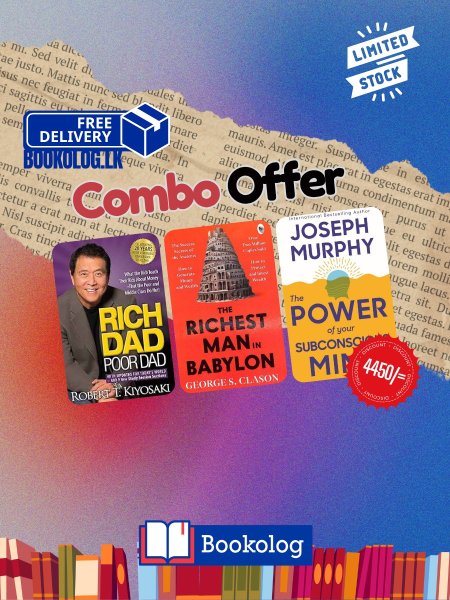
Three timeless classics on money, mindset, and wealth-building. Save big while transforming your financial future.
In Stock
In stock: 2-5 days delivery
Ask about this book
Ask our assistant anything about Rich Dad Poor Dad.
Answers are AI-generated from this book's details and may not be perfect.
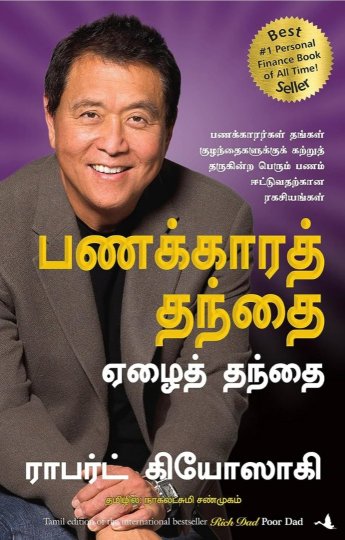
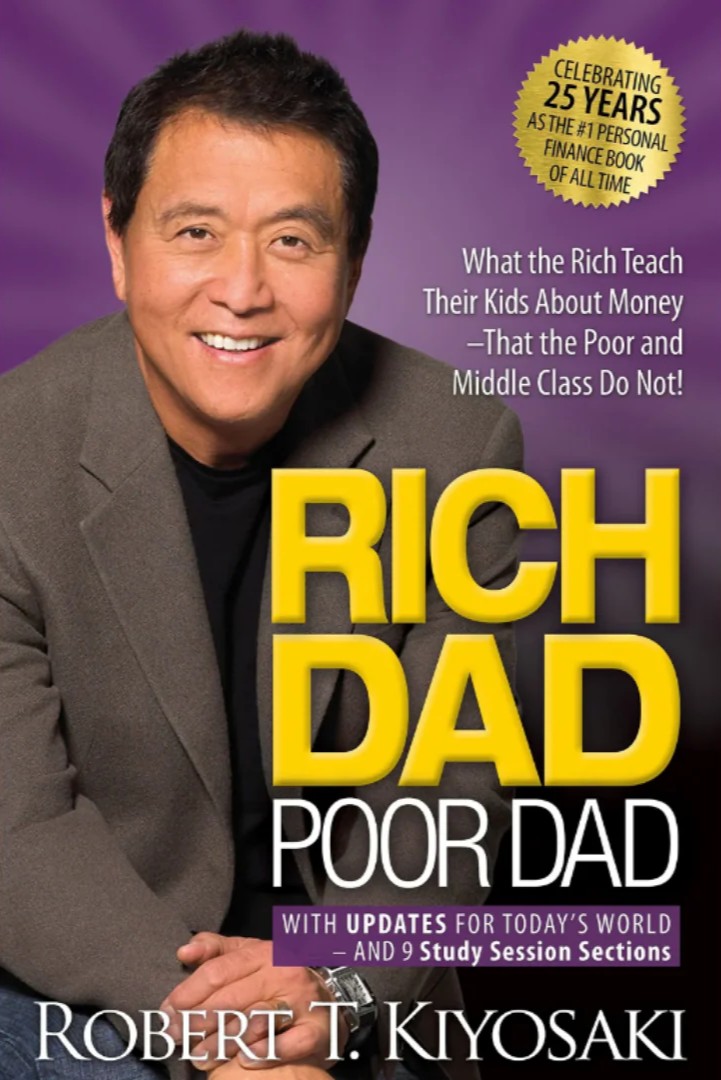
Rich Dad Poor Dad by Robert T. Kiyosaki is a paradigm-shifting book that has sold over 40 million copies worldwide since 1997 and been translated into more than 51 languages. It is not a get-rich-quick scheme or a dry textbook on budgeting, but rather a deeply personal story that challenges conventional thinking about money, work, and wealth. Through the contrasting advice of two father figures - his highly educated but financially struggling biological father (Poor Dad) and the wealthy, entrepreneurial father of his best friend (Rich Dad) - Kiyosaki unpacks the mindset that separates the financially free from those trapped in the rat race. For Sri Lankans navigating economic fluctuations and job security concerns, the lessons of Rich Dad Poor Dad are more relevant than ever. Bookolog, your trusted online bookstore, brings you this timeless classic with the promise of quality and convenience, making the path to financial literacy just a click away.
The book is organized around six key lessons woven into a continuous narrative. The first, 'The Rich Don't Work for Money,' reframes work as a means to learn rather than earn. The second, 'Why Teach Financial Literacy?' introduces a simple but powerful definition: an asset puts money in your pocket, a liability takes money out. Kiyosaki argues that most people mistake liabilities for assets, such as their house or car. The third lesson, 'Mind Your Own Business,' urges readers to focus on building income-generating assets. The fourth covers tax advantages that corporations offer to the rich, the fifth reveals that 'The Rich Invent Money' through creativity and calculated risks, and the sixth encourages readers to 'Work to Learn - Don't Work for Money.' These lessons are illustrated with anecdotes from Kiyosaki's own ventures, making the concepts tangible and actionable for anyone, regardless of their financial background.
At the heart of the book is Kiyosaki's Cashflow Quadrant, which categorizes people by how they earn income: as an Employee (E), Self-Employed (S), Business Owner (B), or Investor (I). The left side (E and S) trades time for money, while the right side (B and I) uses systems and investments to generate wealth. Kiyosaki defines financial IQ as the ability to solve financial problems, comprising increasing income through multiple streams, protecting assets, managing money effectively, and leveraging knowledge to make money work harder. In Sri Lanka, where financial education is rarely part of the school curriculum, this book fills a critical gap by breaking the taboo around money and encouraging open conversation about income, investments, and debt. Bookolog supports this journey by offering a safe, convenient space to purchase transformative books like this one, delivered right to your doorstep across Sri Lanka.
The mood of Rich Dad Poor Dad is one of empowerment and honest provocation. Kiyosaki does not sugarcoat the challenges of breaking away from conventional wisdom, but he argues that the greater risk is to remain financially ignorant. The tone is conversational and designed to shake readers out of complacency. For Sri Lankans seeking alternatives to traditional savings in an era of inflation and market volatility, the concept of generating passive income through assets resonates deeply. The book's accessibility makes it perfect for young adults starting their careers, entrepreneurs seeking validation, or seasoned professionals wanting a fresh perspective. While critics note that some anecdotes are unverifiable, even they acknowledge the book's core message has inspired millions to take control of their finances. Rich Dad Poor Dad is not a step-by-step guide but a starting point that provokes thought and encourages action, helping readers break free from the rat race and build a life where money works for them.
The enduring legacy of Rich Dad Poor Dad lies in its ability to address the fundamental psychological barriers to wealth. Kiyosaki identifies the rat race as a cycle of working to pay bills and taking on more debt, requiring even more work. The only way out is to acquire assets that generate enough income to cover expenses. This simple yet revolutionary idea has changed the way millions think about work and wealth. In Sri Lanka, where the cost of living is rising and job security is uncertain, the book offers a lifeline: by changing your mindset and taking calculated risks, you can build a life of financial independence. Bookolog is proud to deliver this life-changing content to you, ensuring easy access to the tools and mindsets that can transform your life. Order your copy today from Bookolog and start your journey to financial freedom.
Customer feedback
See what readers say about this book and our service.
Service rating
0.0/5
Please sign in to leave a review and rate our service.
No reviews yet. Be the first to rate this book and our service.
Bookolatha
Online · Bookolog assistant
Chat history
This chat stays available while you browse.
Log in to save and revisit multiple conversations.
Log in →Bookolatha is grounded in our catalogue and store info. Answers may not be perfect.