 Ask Bookolatha
Click to enlarge
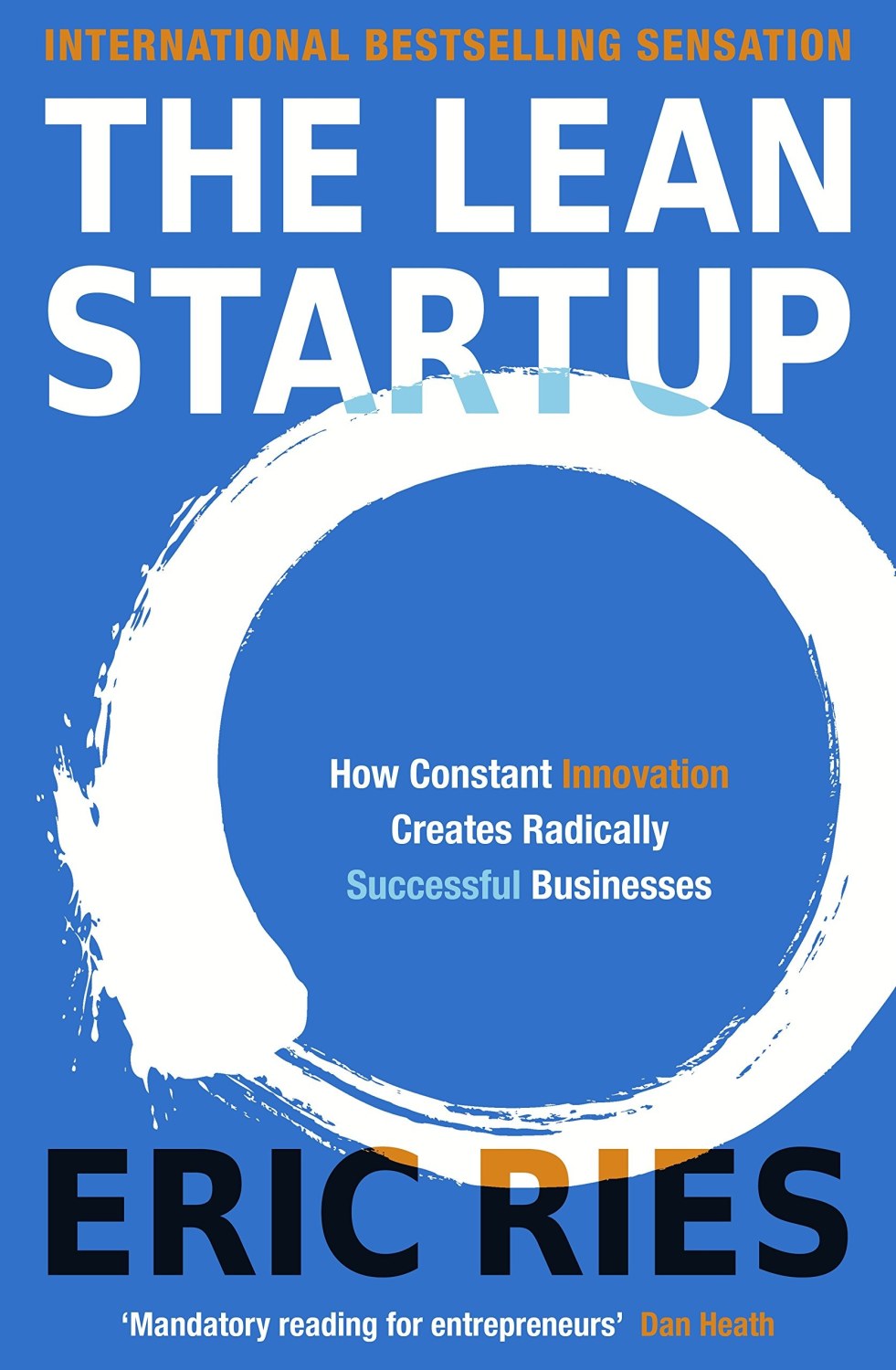
The Lean Startup
Tags
Out of Stock
Currently unavailable
Currently Unavailable
This book is out of stock
Ask about this book
Not sure if it's right for you?
Ask our assistant anything about The Lean Startup.
Answers are AI-generated from this book's details and may not be perfect.
In an era where startups and established enterprises face unprecedented uncertainty, Eric Ries's The Lean Startup offers a radical departure from traditional business planning. Instead of relying on hunches or elaborate business plans, Ries presents a scientific approach to entrepreneurship that prioritizes learning over guessing, iteration over perfection, and customer feedback over intuition. This book has become a foundational text for founders, product managers, and innovators, adopted by companies from fledgling tech startups to Fortune 500 giants. For readers in Sri Lanka, where a vibrant entrepreneurial ecosystem is emerging alongside established family businesses, The Lean Startup provides a practical playbook for navigating risk and building something that truly matters.
The core thesis is that a startup is a temporary organization designed to search for a repeatable and scalable business model. This search is conducted with the rigor of a scientist running experiments using the Build-Measure-Learn feedback loop. Start by building a Minimum Viable Product (MVP) - the simplest version of your idea that allows you to start the loop as quickly as possible. The MVP is a learning vehicle to test the riskiest assumptions. For a Sri Lankan entrepreneur launching a mobile app for local farmers, the MVP might be a simple WhatsApp group that matches buyers and sellers before any code is written. The goal is to get real customer data, measure their behavior, and learn whether to persist or change direction.
Measurement in the Lean Startup is not about vanity metrics. Ries introduces innovation accounting, a framework for measuring progress in a startup. Startups should define actionable metrics that demonstrate cause and effect, such as cohort analysis and retention curves. When data reveals a false hypothesis, the entrepreneur faces a critical decision: pivot or persevere. A pivot is a structured course correction that tests a new fundamental hypothesis. Dropbox famously pivoted from a complicated syncing solution to a simple folder that just works. The ability to change direction based on evidence is the hallmark of a resilient startup.
Beyond the mechanics, the book addresses the human and cultural aspects of innovation. Ries argues that startups must cultivate a culture of experimentation where failure is treated as data. He introduces the Five Whys as a root-cause analysis tool adapted for fast-moving teams. The book also tackles managing the startup's growth engines: the sticky engine (high retention), the viral engine (word-of-mouth), and the paid engine (advertising). Even on a limited budget, controlled experiments can discover which engine drives sustainable growth.
One of the most powerful sections applies to established organizations. Ries introduces the innovation sandbox: a protected team that operates with the rules of a startup while using parent company resources. For Sri Lankan conglomerates, this approach can break the innovator's dilemma and allow safe experimentation. The book also discusses batch size: building and testing in small batches reduces risk and accelerates learning. This is a direct challenge to the waterfall approach.
The mood is both pragmatic and inspirational. Ries writes in a clear, conversational style, drawing on his own experience co-founding IMVU. His honesty about struggles makes the book relatable. For the aspiring entrepreneur in Sri Lanka, reading The Lean Startup feels like sitting with a mentor who has distilled hard-won wisdom. The themes resonate deeply in a context where resources are limited and every rupee must be spent wisely. The target audience is broad: first-time founders, seasoned executives, students, and even investors. This book is ideal for participants in local incubators like Hatch, university entrepreneurship clubs, and corporate innovation labs.
If you are ready to challenge your assumptions, embrace uncertainty, and build a learning organization, The Lean Startup is your guide. It is more than a book; it is a mindset shift that will change the way you approach every business problem. Available now at Bookolog, Sri Lanka's trusted online bookstore. Order your copy today and start building a smarter, leaner, and more resilient venture.
Key Takeaways
- Learn to turn a simple idea into a testable product using the Minimum Viable Product (MVP) approach, saving time and resources.
- Master the Build Measure Learn feedback loop to make data-driven decisions and adapt your strategy based on real customer behavior.
- Discover how innovation accounting replaces vanity metrics with actionable insights that track true progress in your startup journey.
- Understand when to pivot or persevere by recognizing signals from experiments and customer feedback, avoiding costly missteps.
- Apply Lean principles beyond startups to any organization seeking to innovate faster and build a culture of continuous learning.
Customer feedback
Reviews & Service Ratings
See what readers say about this book and our service.
Service rating
0.0/5
Please sign in to leave a review and rate our service.
No reviews yet. Be the first to rate this book and our service.
You Might Also Like
Browse All


Products You May Like
Shop All




Bookolatha
Online · Bookolog assistant
Bookolatha is grounded in our catalogue and store info. Answers may not be perfect.