
Click to enlarge
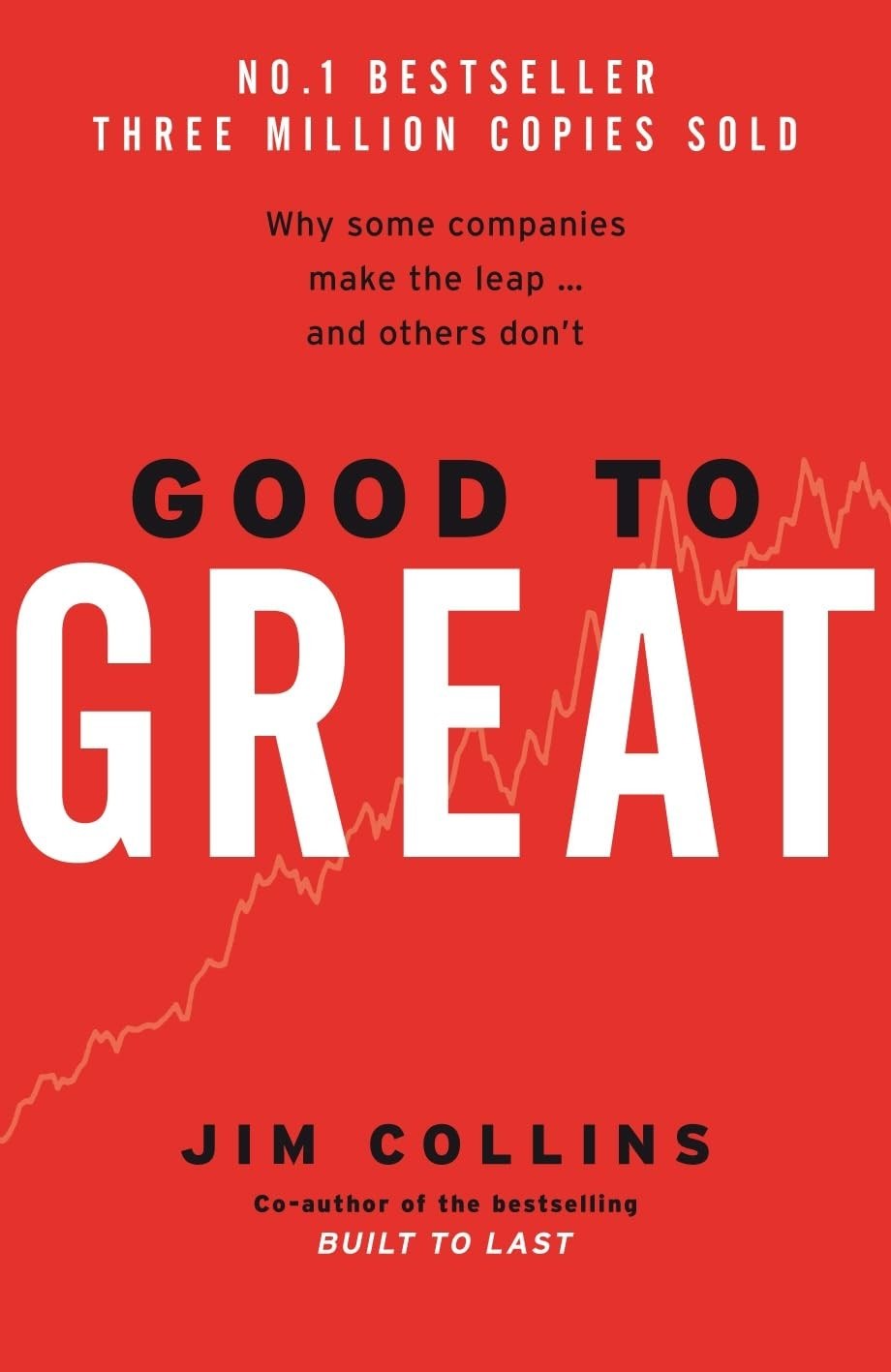
Good to Great: Why Some Companies Make the Leap... and Others Don't
Tags
In Stock
In stock: 2-5 days delivery
Ask about this book
Not sure if it's right for you?
Ask our assistant anything about Good to Great: Why Some Companies Make the Leap... and Others Don't.
Answers are AI-generated from this book's details and may not be perfect.
Greatness is not a matter of luck or circumstance. It is a choice, a discipline, and a relentless pursuit of a profound principle. In his landmark book Good to Great: Why Some Companies Make the Leap... and Others Don't, James C. Collins provides an answer that is both surprising and deeply practical. Based on a rigorous five-year research project, Collins and his team analyzed thousands of companies to identify a small set that made a lasting transition from good to great, achieving cumulative stock returns at least three times the market average for fifteen years or more. The result is a timeless framework that challenges cherished beliefs about leadership, strategy, and corporate success. This book is not a prescription for quick fixes but a deep dive into what it really takes to build an organization that can sustain excellence over generations.
The research began with 1,435 Fortune 500 companies, applying a ruthless filter to identify only eleven that made the leap. Each passed a strict test: fifteen years of returns at or below the market, followed by fifteen years of returns exceeding the market by at least three times. Collins then studied these companies in depth, comparing them with direct competitors that failed to make the leap. The insights are organized into a simple but powerful framework. At its heart lies Level 5 Leadership, perhaps the most counterintuitive finding. The leaders of good-to-great companies were not charismatic celebrities. They were quiet, reserved individuals who channeled their ambition into the company, not themselves. They combine personal humility with professional will, taking blame for failures and giving credit to others. The lesson: building greatness requires building a great system, not being a hero.
The second principle is First Who, Then What. Good-to-great companies focused first on getting the right people on the bus, the wrong people off, and the right people in the right seats, only then figuring out where to drive. This people-first approach ensures resilience; with the right team, they can adapt to change without losing momentum. Central to the book is the Hedgehog Concept, borrowed from the ancient Greek parable of the fox and the hedgehog. The fox knows many things; the hedgehog knows one big thing. In business, the hedgehog is the company that focuses relentlessly on the intersection of three circles: what you are deeply passionate about, what you can be the best in the world at, and what drives your economic engine. Great companies do not try to be all things to all people. They identify their unique strength and pour all energy into it, requiring brutal honesty about where they cannot be the best and the discipline to say no to attractive but divergent paths.
Another key principle is the Culture of Discipline. Discipline here is not about bureaucracy but about consistent adherence to the Hedgehog Concept. Good-to-great companies combine an entrepreneurial spirit with a systematic approach. People are disciplined enough to do what needs to be done without constant supervision. The Flywheel Effect is a vivid metaphor: imagine a huge, heavy wheel. To get it moving, you push with enormous effort. Keep pushing in the same direction, and the wheel gains momentum, eventually spinning on its own power. Greatness is built through quiet, relentless accumulation of effort. In contrast, comparison companies experienced the Doom Loop, jumping from one program to another without building momentum. Technology is used as a Technology Accelerator, not a creator of momentum. Good-to-great companies selectively adopt technologies that align with their Hedgehog Concept, amplifying what they already do well.
The research debunks common myths: charismatic leadership can be a liability; radical change programs rarely produce lasting greatness; you do not need to be in a great industry to be a great company. Case studies of companies like Abbott, Kimberly-Clark, Kroger, Nucor, and others illustrate how the framework plays out. The mood of Good to Great is one of thoughtful optimism. Collins writes with clarity and conviction, weaving data and narrative to make his points compelling. The book challenges readers to think differently about success and embrace a more systematic, humble, and disciplined approach. The intended audience is broad: CEOs, managers, entrepreneurs, students, and anyone who cares about building something that lasts. For Sri Lankan entrepreneurs and business leaders, these principles are especially relevant. In a rapidly growing economy, the temptation is to chase growth at all costs or imitate trends from abroad. Good to Great offers a countercultural message: focus on what you can be the best at, build a disciplined culture, and lead with humility. These ideas can help Sri Lankan businesses build a strong foundation for long-term success, avoiding boom-and-bust cycles.
At Bookolog, we are committed to bringing the best books to our readers in Sri Lanka. Good to Great is a cornerstone of business literature, and we are proud to offer it in our collection. Whether you are looking to order online or visit our store, we ensure a seamless experience. This book is more than a purchase; it is an investment in your leadership and your organization's future. Buy online in Sri Lanka at Bookolog and start your own flywheel of transformation.
Key Takeaways
- Great leaders blend personal humility with fierce professional will, putting the company ahead of themselves.
- Get the right people on the bus before deciding where to drive it—people first, strategy second.
- Focus on the intersection of passion, best-in-world potential, and economic engine—the Hedgehog Concept.
- Sustainable greatness comes from consistent, cumulative effort in one direction, not from dramatic leaps.
- Use technology as an accelerator, not a primary driver—align it with your core Hedgehog Concept.
Customer feedback
Reviews & Service Ratings
See what readers say about this book and our service.
Service rating
0.0/5
Please sign in to leave a review and rate our service.
No reviews yet. Be the first to rate this book and our service.
You Might Also Like
Browse All


Products You May Like
Shop All




Bookolatha
Online · Bookolog assistant
Chat history
This chat stays available while you browse.
Log in to save and revisit multiple conversations.
Log in →Bookolatha is grounded in our catalogue and store info. Answers may not be perfect.