 Ask Bookolatha
Click to enlarge
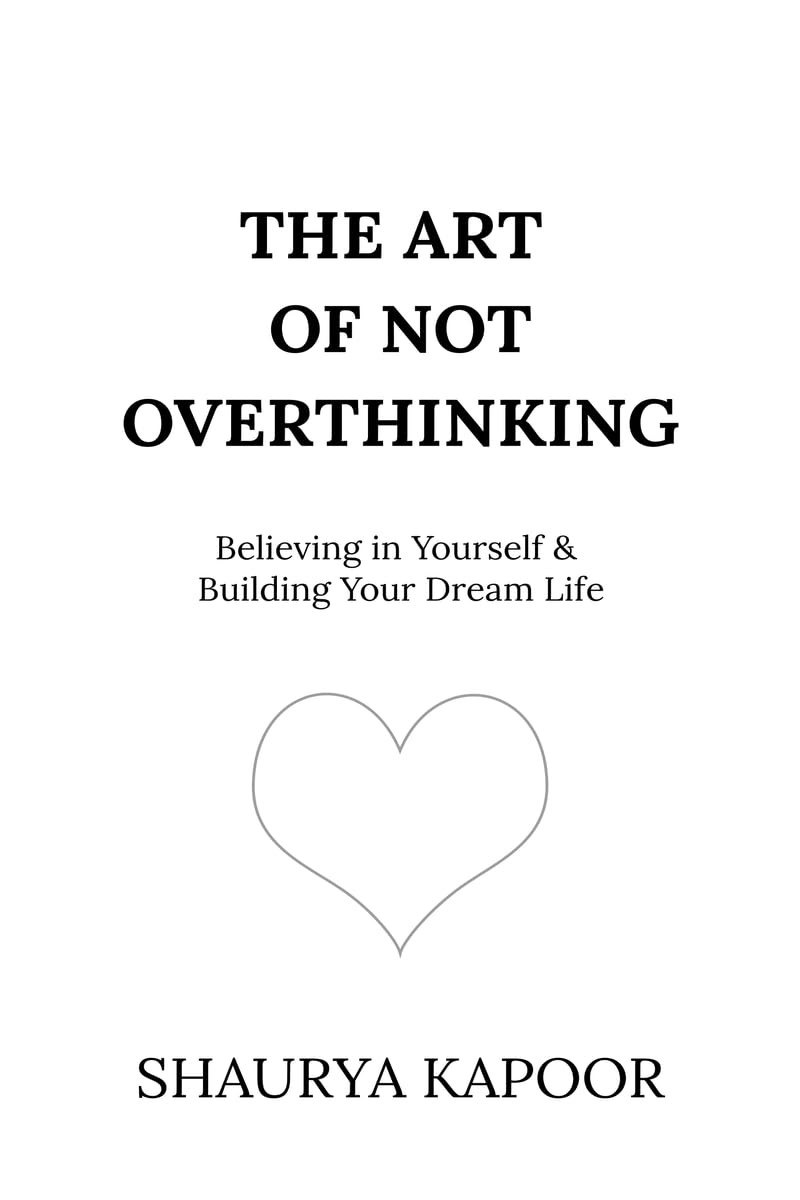
The Art of Not Overthinking
Tags
In Stock
In stock: 2-5 days delivery
Ask about this book
Not sure if it's right for you?
Ask our assistant anything about The Art of Not Overthinking.
Answers are AI-generated from this book's details and may not be perfect.
Do you find yourself lying awake at night, replaying conversations or worrying about things you cannot change? The Art of Not Overthinking by Shaurya Kapoor is your gentle yet powerful handbook to escaping the mental hamster wheel. This is not about trying to think less; it is about learning to think differently. Kapoor, a cognitive psychologist with years of clinical experience, has crafted a guide that transforms the way you relate to your own mind. The book dismantles the myth that overthinking is a permanent personality flaw, revealing it instead as a learned habit that can be unlearned. Through a blend of cognitive science, mindfulness practices, and real-life case studies, Kapoor offers a step-by-step blueprint for reclaiming mental peace.
The journey begins with understanding your personal overthinking triggers. Kapoor explains that rumination often stems from a misplaced desire for control and certainty. In the first section, she guides you to identify the specific situations, people, or thoughts that set off the cycle of worry. This self-awareness is the foundation for change. You will learn to distinguish between productive reflection and destructive overanalysis. For instance, planning for a project is reflection; replaying a past mistake for hours is overthinking. The book provides practical exercises to help you map your triggers and recognize the early warning signs of mental spirals.
Once you understand the triggers, Kapoor introduces a toolkit of cognitive reframing techniques. She draws from evidence-based methods like cognitive behavioral therapy and mindfulness-based stress reduction, but she presents them in an accessible, non-clinical way. You will learn to challenge irrational thoughts by examining the evidence for and against them. A powerful exercise involves writing down the worst-case scenario, the best-case scenario, and the most likely outcome, which often reveals that your fears are exaggerated. Kapoor also teaches the art of mental distancing, where you observe your thoughts like clouds passing in the sky rather than getting caught in them. These techniques are designed to break the automaticity of overthinking, giving you space to respond rather than react.
The book then moves into action-oriented strategies for building new mental habits. Kapoor emphasizes that lasting change requires daily practice, not just intellectual understanding. She introduces the concept of 'thought anchoring', which involves choosing a specific focus for your attention, such as your breath or a mantra, that you can return to when overthinking arises. There are also chapters on decision-making, where she shows how to embrace 'good enough' choices instead of endlessly seeking the perfect option. For perfectionists, this is a liberating shift. Kapoor includes a step-by-step guide to implementing a 'decision cutoff' time, after which you commit to moving forward without second-guessing. These practical frameworks help you break the paralysis that overthinking causes in career, relationships, and personal goals.
Real-world case studies illustrate these principles in action. You will read about Maya, a marketing executive who learned to stop catastrophizing about client meetings; Rohan, a student who overcame exam anxiety by reframing his fear of failure; and Priya, a mother who found peace by letting go of constant worry about her children. These stories are drawn from Kapoor's clinical practice and are relatable across cultures. For readers in Sri Lanka, where the pressures of academic success, family expectations, and economic uncertainty can fuel chronic overthinking, these examples resonate deeply. Kapoor's approach is universal, but she writes with sensitivity to the contexts of busy professionals, students, and caregivers from all walks of life.
The tone of the book is warm, empathetic, and free of jargon. Kapoor writes as if she is sitting across from you, understanding your struggles without judgment. Each chapter concludes with a 'Take Action' section that provides concrete steps to apply immediately. For example, you might be asked to set aside ten minutes each morning for a 'worry period' where you allow yourself to think about concerns, then consciously set them aside for the rest of the day. This technique, like many in the book, is based on research but delivered in a way that feels manageable. The mood is hopeful and empowering; Kapoor does not promise a life free of challenges, but she offers a path to facing challenges with clarity and calmness.
This book is especially valuable for perfectionists, high-achievers, and anyone who feels mentally exhausted by their own thoughts. It is also a resource for those who struggle with social anxiety, career stress, or relationship over-analysis. Kapoor shows that peace of mind is not about stopping your thoughts; it is about learning which thoughts deserve your attention. By the final page, you will have a personal toolkit to face uncertainty with confidence. You will learn to embrace imperfection, trust your decisions, and rest without guilt.
For readers in Sri Lanka, Bookolog is proud to offer this transformative guide. As a trusted online bookstore, Bookolog brings the best self-help literature from around the world directly to your doorstep. Whether you live in Colombo, Kandy, Jaffna, Galle, or any other part of the island, ordering The Art of Not Overthinking is simple and convenient. The book is carefully packaged and delivered with speed, ensuring that your journey to mental clarity begins without delay. Investing in this book is an investment in your wellbeing, and Bookolog is committed to making that investment accessible to every Sri Lankan reader.
In a world that constantly demands more of your attention, learning to quiet the noise within is a superpower. The Art of Not Overthinking is not just a book; it is a companion for your journey toward a quieter mind. Kapoor's wisdom is practical, compassionate, and scientifically grounded. She invites you to step off the hamster wheel and rediscover the peace that already exists within you. By the time you finish reading, you will see that overthinking is not a lifelong sentence but a habit that can be gently released, freeing you to live with greater ease and joy.
Key Takeaways
- Recognize that overthinking is a habit, not a fixed trait—and you can change it with daily practice.
- Learn the 'mental pause' technique to stop a worry spiral before it drains your energy.
- Use simple journaling prompts to separate what's actually in your control from what isn't.
- Discover how setting a 'worry window' each day can free up the rest of your time for joy.
- Replace the need for certainty with a calm acceptance of ambiguity and imperfect decisions.
Customer feedback
Reviews & Service Ratings
See what readers say about this book and our service.
Service rating
0.0/5
Please sign in to leave a review and rate our service.
No reviews yet. Be the first to rate this book and our service.
You Might Also Like
Browse All






Products You May Like
Shop All




Bookolatha
Online · Bookolog assistant
Bookolatha is grounded in our catalogue and store info. Answers may not be perfect.