 Ask Bookolatha
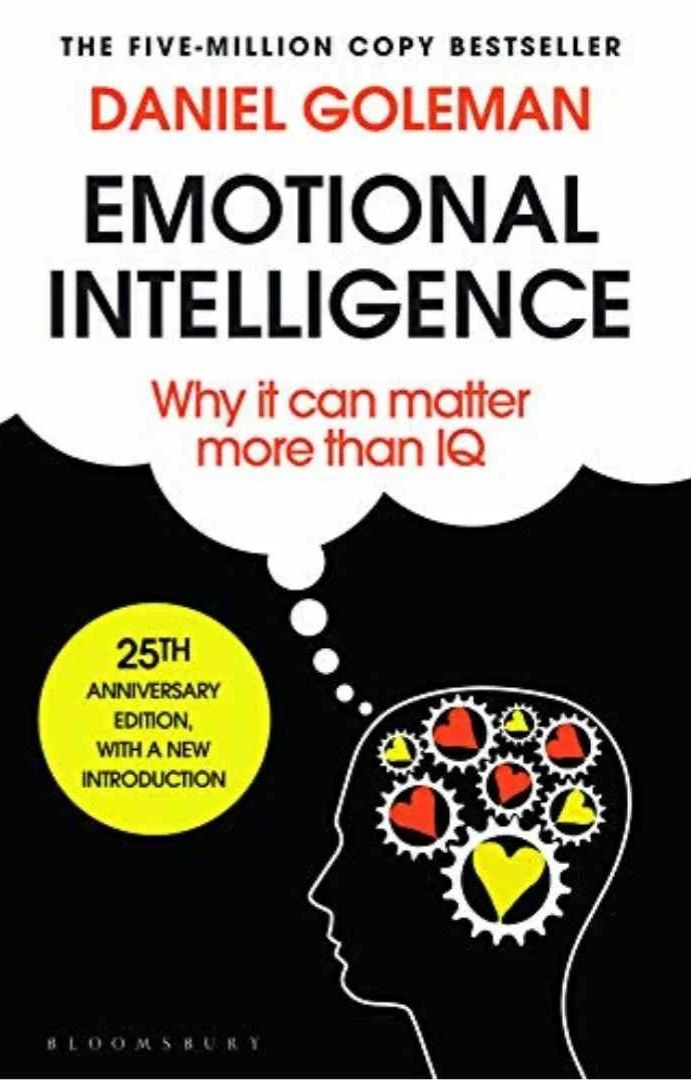
Click to enlarge
Emotional Intelligence
Tags
In Stock
In stock: 2-5 days delivery
Ask about this book
Not sure if it's right for you?
Ask our assistant anything about Emotional Intelligence.
Answers are AI-generated from this book's details and may not be perfect.
In Emotional Intelligence, Daniel Goleman makes a powerful case that our emotions often outweigh our rational minds in shaping success and well-being. First published in 1995, this landmark book introduced the concept of emotional intelligence (EQ) to the world, challenging the conventional wisdom that IQ alone determines life outcomes. Drawing on groundbreaking research in neuroscience and psychology, Goleman shows that self-awareness, self-regulation, motivation, empathy, and social skills are essential for thriving in relationships, work, and personal growth.
The book begins by exploring the biology of emotions, focusing on the amygdala, the brain's emotional sentinel that can hijack our rational responses during stress. This 'amygdala hijack' explains why even the brightest individuals can make poor decisions when overwhelmed by anger or fear. Goleman traces the evolution of the brain, revealing that our emotional centers developed long before the neocortex. Our ancient emotional wiring, designed for survival, often clashes with modern life, making emotional mastery crucial.
Goleman argues that emotional literacy, the ability to recognize and name emotions, is the foundation for managing them effectively. Without this skill, we are vulnerable to raw feelings that can disrupt goals and damage relationships. He introduces the five core competencies of EQ: self-awareness, self-regulation, motivation, empathy, and social skills. Self-awareness involves recognizing one's own emotions and their impact; self-regulation enables impulse control and adaptability; motivation channels emotions toward goals and fosters optimism; empathy allows sensing others' feelings; and social skills encompass communication, influence, leadership, and conflict resolution. These competencies are not fixed but can be learned and strengthened over time.
In parenting, emotionally attuned parents who label feelings and guide children through difficult moments raise kids with higher EQ. These children are better equipped to handle adversity and form healthy relationships. In education, Goleman advocates for social-emotional learning (SEL) programs that teach these skills, showing evidence that SEL improves academic performance and reduces bullying and anxiety. In the workplace, EQ often outranks IQ and technical skills as a predictor of success. Leaders with high EQ inspire trust and collaboration, while teams with strong emotional intelligence outperform those composed solely of high-IQ individuals. Goleman cites studies from companies like American Express and Ford, where emotional training boosted sales and customer satisfaction.
Goleman also addresses the potential misuse of emotional skills, warning that narcissists and sociopaths can wield them manipulatively. Therefore, EQ must be grounded in ethics and genuine concern for others. A crucial chapter on brain plasticity explains that emotional intelligence can be cultivated throughout life through deliberate practice. Techniques like mindfulness meditation help reduce reactivity and enhance regulation. Practical steps for improving each competency are supported by research from behavioral psychology and cognitive science.
The book's impact has been profound, sparking global initiatives in schools and corporations. Decades later, the principles remain vital in a world demanding collaboration, adaptability, and resilience. Whether you are a leader, parent, or individual seeking growth, Emotional Intelligence offers a timeless roadmap to a more fulfilling life. For readers in Sri Lanka, this transformative book is available at Bookolog, your trusted online bookstore for self-help and psychology classics. Bookolog provides convenient delivery across the island, making it easy to add this essential guide to your library. Order your copy today and begin your journey toward greater emotional mastery.
Key Takeaways
- Understand the five components of emotional intelligence: self-awareness, self-regulation, motivation, empathy, and social skills.
- Learn why IQ alone does not guarantee success; emotional skills are critical in relationships and work.
- Discover how to manage your emotions effectively to reduce stress and improve decision-making.
- Gain insights into the neural basis of emotions and how the amygdala hijacks rational thought under pressure.
- Apply practical strategies to enhance empathy and build stronger personal and professional relationships.
Customer feedback
Reviews & Service Ratings
See what readers say about this book and our service.
Service rating
0.0/5
Please sign in to leave a review and rate our service.
No reviews yet. Be the first to rate this book and our service.
You Might Also Like
Browse All




Products You May Like
Shop All




Bookolatha
Online · Bookolog assistant
Bookolatha is grounded in our catalogue and store info. Answers may not be perfect.