
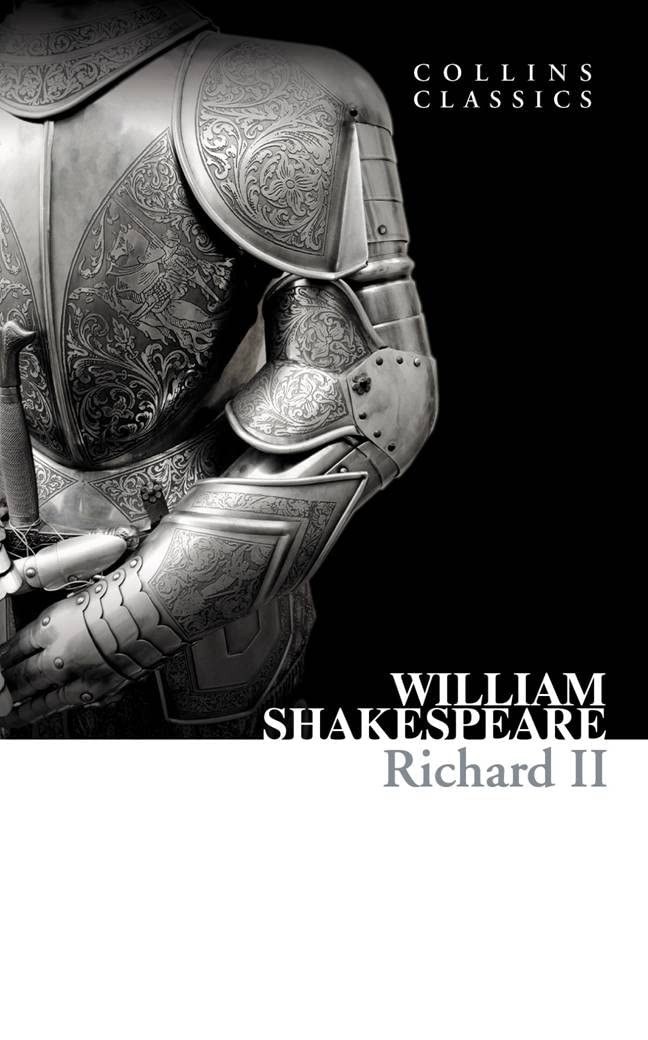
Click to enlarge
Richard II
Tags
In Stock
In stock: 2-5 days delivery
Ask about this book
Not sure if it's right for you?
Ask our assistant anything about Richard II.
Answers are AI-generated from this book's details and may not be perfect.
Richard II is one of William Shakespeare's most compelling historical plays, forming the first part of his Henriad tetralogy. Written around 1595, it dramatizes the turbulent reign of King Richard II of England, focusing on his downfall and the rise of Henry Bolingbroke, later Henry IV. This edition, part of the Collins Classics series, offers a clear, modern text with helpful notes for students and general readers alike.
The play opens with a royal dispute between Henry Bolingbroke and Thomas Mowbray, Duke of Norfolk. Richard II, despite his royal authority, fails to resolve the conflict effectively, exiling both men. When Bolingbroke's father, John of Gaunt, dies, Richard seizes Gaunt's wealth to fund a war in Ireland, an act that alienates the nobility and the people. While Richard is abroad, Bolingbroke returns to England, claiming his inheritance, but quickly gains enough support to challenge the king himself.
Shakespeare explores profound themes of kingship, identity, and legitimacy. Richard is portrayed as a flawed monarch: poetic, self-indulgent, and blind to the practical realities of rule. His speeches, such as the famous "hollow crown" soliloquy, reveal a deep introspection about the transience of power. Bolingbroke, in contrast, is pragmatic and ambitious, yet he too is haunted by the moral compromises required to seize the throne.
The play is notable for its rich language and symbolic imagery. Shakespeare uses garden metaphors to discuss the state of England, and the famous scene where Richard descends from the castle walls to the base court symbolizes his fall from grace. The deposition scene is a masterpiece of psychological drama, as Richard gradually accepts his loss of identity and kingship.
For readers in Sri Lanka and beyond, this Collins Classics edition provides an accessible entry point to one of Shakespeare's most lyrical history plays. The text is complemented by a glossary, explanatory notes, and an introduction that situates the play in its historical context. Whether you are a student, a teacher, or a lover of classic literature, Richard II offers timeless insights into leadership, loyalty, and the human condition.
Key themes include: divine right versus human ambition, the emotional cost of political change, and the search for personal identity in times of crisis. The play also tackles questions of justice, honor, and patriotism. Its relevance endures, making it a staple of literature courses and theater repertoires worldwide.
This edition from Collins Classics is presented in a clean, easy-to-read format, perfect for both study and pleasure. It is a must-have for any collection of Shakespeare's works.
Key Takeaways
- Richard II shows how a king's personal weakness can unravel a kingdom, reminding us that leadership demands both strength and self-awareness.
- The play explores the tension between divine right and popular will, a conflict still relevant in modern politics and governance.
- Through Richard's poetic speeches, Shakespeare reveals how language can both express and disguise our deepest fears and desires.
- Bolingbroke's rise to power illustrates that ambition, when unchecked, may lead to moral compromise and a troubled reign.
- The garden scene allegorically teaches that a nation, like a garden, requires careful tending and wise stewardship to flourish.
Customer feedback
Reviews & Service Ratings
See what readers say about this book and our service.
Service rating
0.0/5
Please sign in to leave a review and rate our service.
No reviews yet. Be the first to rate this book and our service.
More from William Shakespeare
View All

You Might Also Like
Browse All







Products You May Like
Shop All




Bookolatha
Online · Bookolog assistant
Bookolatha is grounded in our catalogue and store info. Answers may not be perfect.